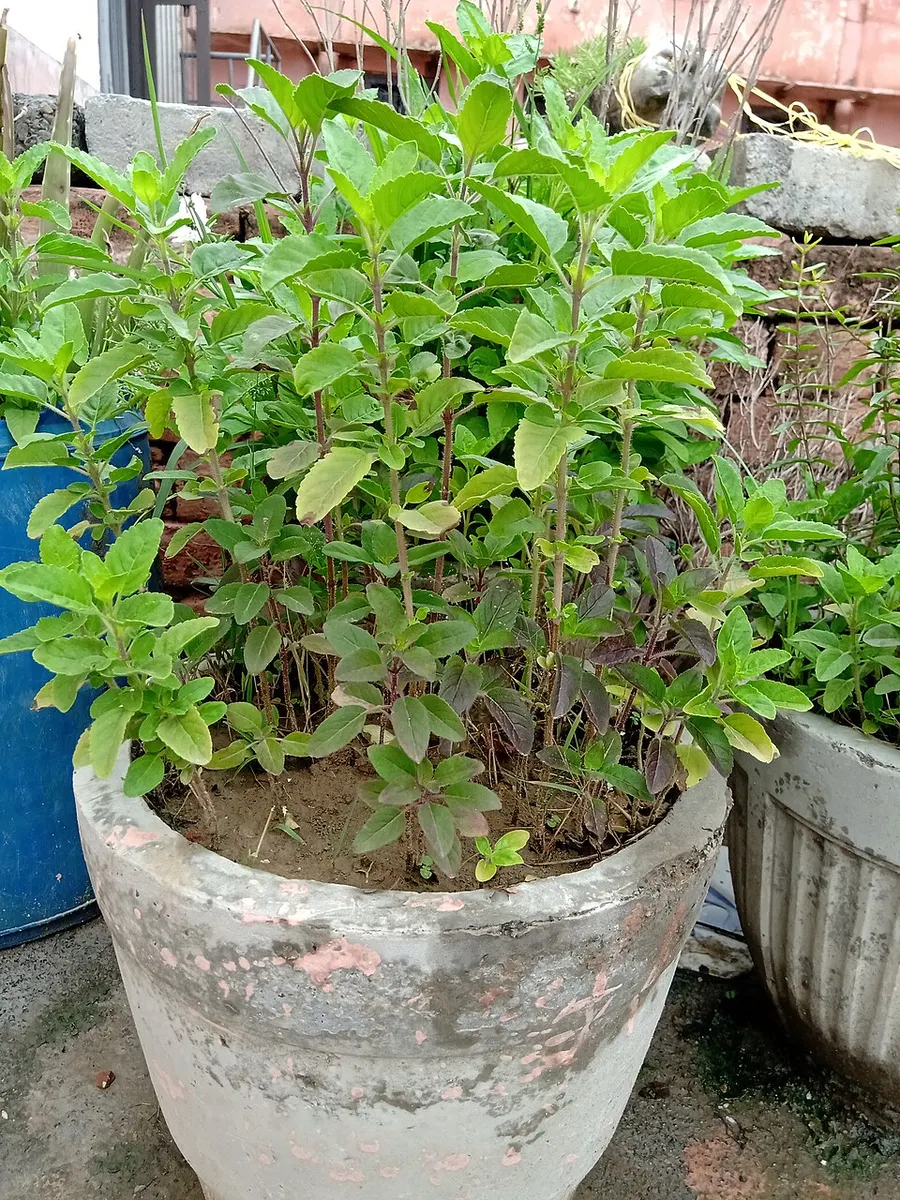
Photo: Diamante Phi / Wikimedia Commons (CC BY-SA 4.0)
Tulsi (Holy Basil) (Ocimum tenuiflorum): Sacred herb of Ayurveda known for immunity, stress relief, and respiratory support.
🔍 Quick Facts
| Common name | Tulsi (Holy Basil) |
| Other names | Tulsi, Tulasi (Hindi); Thulasi (Tamil, Malayalam); Tulshi (Marathi, Bengali) |
| Scientific name | Ocimum tenuiflorum |
| Plant family | Lamiaceae (mint family) |
| Size | 30–100 cm bushy herb |
| Native region | Indian Subcontinent |
| Climate | Tropical |
| Ease of growing | Easy |
| Parts used | Leaves, Seeds, Root |
About Tulsi
Tulsi is the most widely grown household plant in India — traditionally kept in a raised tulsi vrindavan in the courtyard and worshipped daily. Two common types are grown: green-leaved Rama Tulsi and purple-tinged Krishna (Shyama) Tulsi, which has a sharper, clove-like aroma. In Ayurveda it is classed as an adaptogen and a respiratory herb, and it is one of the most researched Indian herbs for its effect on stress and immunity.
Botanically known as Ocimum tenuiflorum, it belongs to the Lamiaceae family. It is native to Indian Subcontinent and grows best in a tropical climate. The parts most often used are the leaves, seeds and root.
Traditional & Ayurvedic Uses
Tulsi is best known for:
- Immunity booster
- Cold & cough
- Stress relief
- Skin care
- Fever management
Most of these uses come from Ayurveda and folk medicine. Where we know of good clinical evidence, or of a specific safety concern, we say so in the overview, precautions and FAQs on this page.
How Tulsi Is Used
- A few fresh leaves are steeped in hot water for tulsi tea, often with ginger and honey for colds.
- Leaves are chewed fresh or added to kadha (herbal decoction) during cough and fever season.
- Dried leaf powder is mixed with honey; tulsi oil is used in balms and steam inhalation.
How to Grow Tulsi
| ☀️ Sunlight | Full sun, at least 6 hours a day. In north Indian winters move pots to the sunniest, most sheltered spot. |
| 💧 Watering | Water when the top 2–3 cm of soil is dry — usually daily in summer, every 2–3 days in winter. Never let the pot sit in water. |
| 🪴 Soil | Light, well-draining loam with compost; a mix of garden soil, cocopeat and vermicompost (2:1:1) works well in pots. |
| 🌱 Propagation | Seeds sown in spring or monsoon germinate in 8–14 days; softwood cuttings root easily in water within two weeks. |
| 📅 When to plant (India) | Sow February–April or June–July. Tulsi struggles below 10°C and often dies back in a cold winter. |
| 🏡 In pots / at home | Grows very well in a 10–12 inch pot. Pinch off flower spikes (manjari) to keep the plant leafy for longer. |
Precautions & Safety
- May lower blood sugar — monitor if you take diabetes medication.
- Large medicinal doses are traditionally avoided in pregnancy and when trying to conceive.
- May slow blood clotting; stop concentrated extracts two weeks before surgery.
Frequently Asked Questions
Further Reading on Tulsi
Written by the WhyOnPlanet editorial team · Last updated October 2026