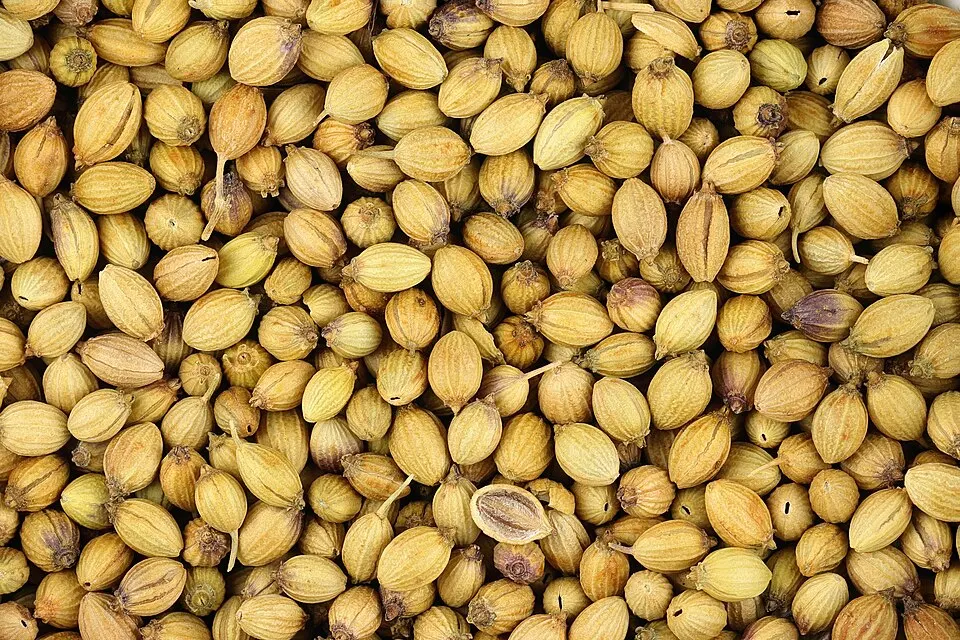
Photo: Sanjay Acharya / Wikimedia Commons (CC BY-SA 4.0)
Coriander (Dhania) (Coriandrum sativum): Versatile culinary herb with cooling properties and digestive, anti-inflammatory benefits.
🔍 Quick Facts
| Common name | Coriander (Dhania) |
| Other names | Dhania, Hara dhania (Hindi); Kothamalli (Tamil); Kottimeera (Telugu) |
| Scientific name | Coriandrum sativum |
| Plant family | Apiaceae (carrot family) |
| Size | 20–60 cm annual |
| Native region | Mediterranean, South Asia |
| Climate | Temperate |
| Ease of growing | Easy |
| Parts used | Leaves, Seeds, Root |
About Coriander
Coriander is used in almost every Indian kitchen twice over: the fresh leaves as a garnish and the dried seeds as a core spice. In Ayurveda the seeds are considered cooling and are boiled into dhania water for acidity and urinary burning. Homegrown coriander is notoriously quick to bolt in heat, so timing the sowing correctly is the key to a good harvest.
Botanically known as Coriandrum sativum, it belongs to the Apiaceae family. It is native to Mediterranean, South Asia and grows best in a temperate climate. The parts most often used are the leaves, seeds and root.
Traditional & Ayurvedic Uses
Coriander is best known for:
- Digestion
- Blood sugar
- Anti-inflammatory
- Detox
- Skin rashes
Most of these uses come from Ayurveda and folk medicine. Where we know of good clinical evidence, or of a specific safety concern, we say so in the overview, precautions and FAQs on this page.
How Coriander Is Used
- Fresh leaves are used in chutneys, garnishes and green masalas.
- Roasted, ground seeds are a base of garam masala and most curry powders.
- Dhania water — seeds soaked or boiled in water — is a traditional cooling drink.
How to Grow Coriander
| ☀️ Sunlight | Full sun in winter; partial shade if sown in warmer months. |
| 💧 Watering | Keep soil lightly moist; dry spells trigger early flowering. |
| 🪴 Soil | Loose, fertile, well-drained soil with compost. |
| 🌱 Propagation | Gently crush the round seeds into two halves and soak overnight before sowing. Germination takes 7–14 days. |
| 📅 When to plant (India) | Sow September–February in the plains. In hills it can be sown through summer. |
| 🏡 In pots / at home | A 6–8 inch deep pot or trough. Sow every 2–3 weeks for a continuous supply. |
Precautions & Safety
- Rare allergy in people sensitive to the carrot family (celery, fennel).
- Large amounts of seed may lower blood sugar and blood pressure.
Frequently Asked Questions
Further Reading on Coriander
Written by the WhyOnPlanet editorial team · Last updated October 2026