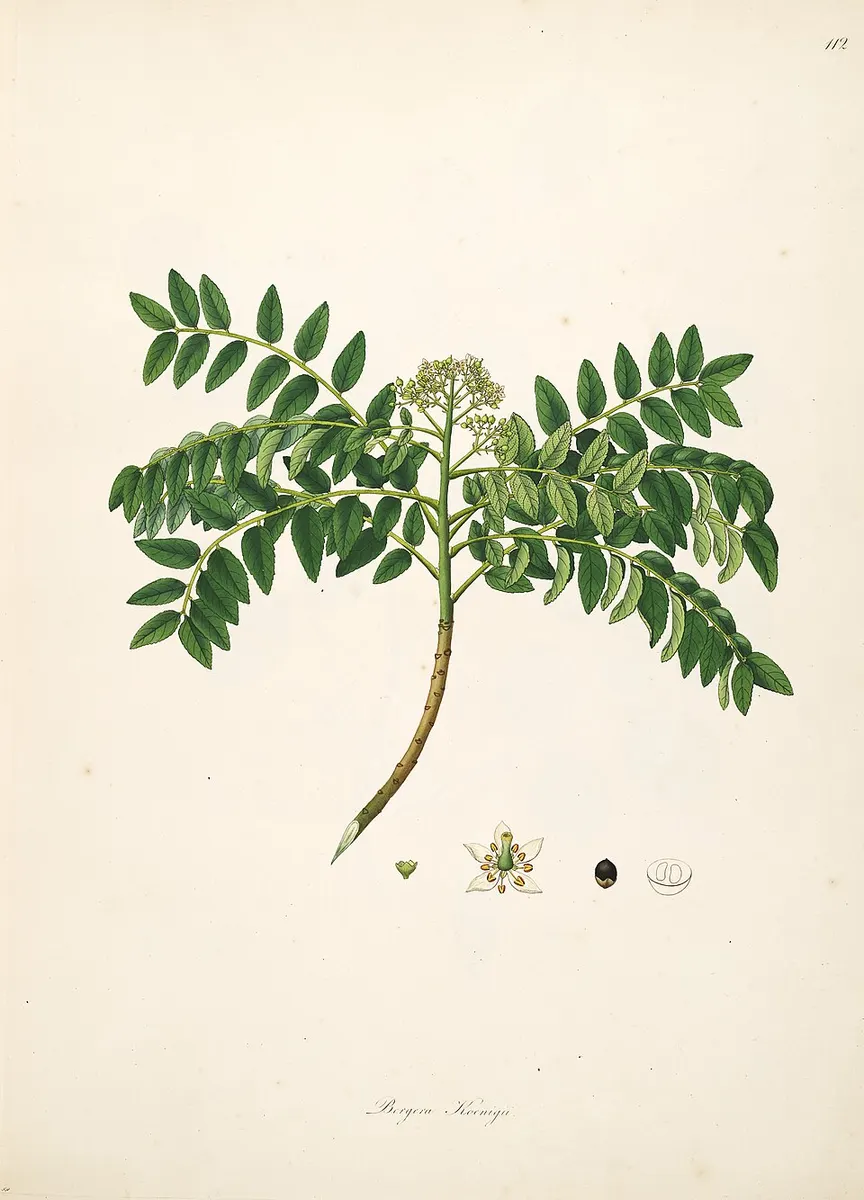
Curry Leaf (Murraya koenigii): Aromatic Indian herb that enhances flavour, supports digestion, and promotes healthy hair.
🔍 Quick Facts
| Common name | Curry Leaf |
| Other names | Kadi patta, Meetha neem (Hindi); Karuveppilai (Tamil); Karivepaku (Telugu) |
| Scientific name | Murraya koenigii |
| Plant family | Rutaceae (citrus family) |
| Size | Small tree, 2–6 m (kept 1–2 m in pots) |
| Native region | India, Sri Lanka |
| Climate | Tropical |
| Ease of growing | Moderate |
| Parts used | Leaves, Bark, Root |
About Curry Leaf
Curry leaf is the signature aroma of South Indian cooking — a sprig crackling in hot oil starts countless dals, sambars and poha. It is a small citrus-family tree, unrelated to "curry powder". Fresh leaves lose most of their fragrance within days, which is why so many Indian families keep a plant at home. Young plants are slow, but a well-established tree produces leaves for decades.
Botanically known as Murraya koenigii, it belongs to the Rutaceae family. It is native to India, Sri Lanka and grows best in a tropical climate. The parts most often used are the leaves, bark and root.
Traditional & Ayurvedic Uses
Curry Leaf is best known for:
- Hair growth
- Digestion
- Blood sugar
- Antioxidant
- Anaemia
Most of these uses come from Ayurveda and folk medicine. Where we know of good clinical evidence, or of a specific safety concern, we say so in the overview, precautions and FAQs on this page.
How Curry Is Used
- A sprig of leaves is fried in oil for tadka in dals, chutneys and upma.
- Dried and powdered leaves make karuveppilai podi, a rice-mix powder.
- Leaves are boiled in coconut oil as a traditional hair oil.
How to Grow Curry Leaf
| ☀️ Sunlight | Full sun; at least 5–6 hours. |
| 💧 Watering | Moderate; let the topsoil dry between waterings. Water very little in winter, when it goes semi-dormant. |
| 🪴 Soil | Well-drained, slightly acidic soil. Feed with compost; a little buttermilk diluted in water is a popular home tonic. |
| 🌱 Propagation | Fresh seeds from ripe black berries, or suckers from the base of an older plant. Stem cuttings are difficult. |
| 📅 When to plant (India) | Plant March–July. Expect leaf drop in winter and fresh growth in spring. |
| 🏡 In pots / at home | Start in a 12-inch pot and move up to 18 inches. Prune the tip to make it bushy. |
Precautions & Safety
- The leaves are safe as food; the seeds are not eaten.
- Concentrated extracts may lower blood sugar.
Frequently Asked Questions
Further Reading on Curry Leaf
Written by the WhyOnPlanet editorial team · Last updated October 2026