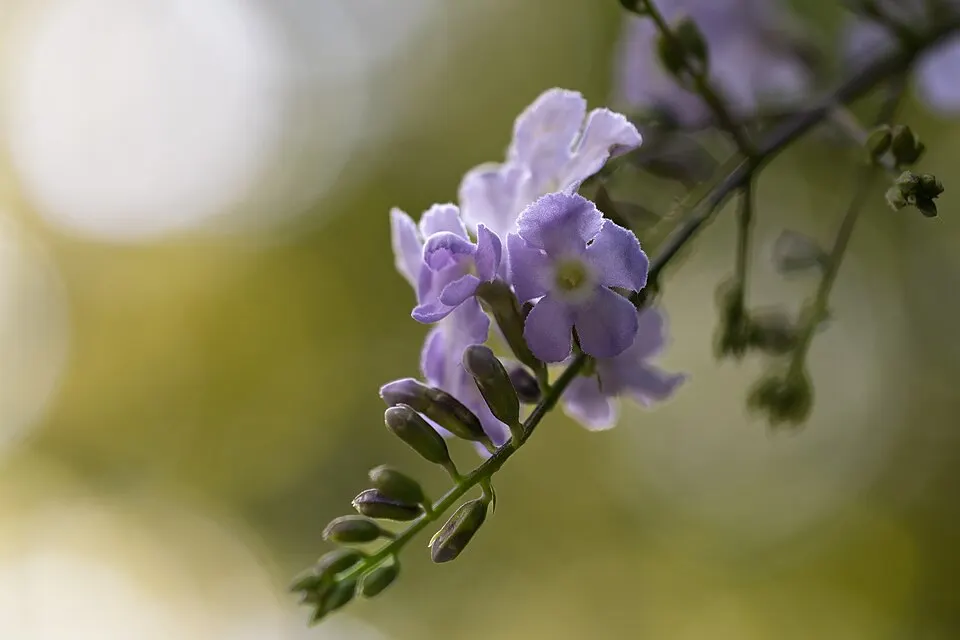
Photo: Jules Verne Times Two / Wikimedia Commons (CC BY-SA 4.0)
Duranta (Golden Dewdrop) (Duranta erecta): Ornamental shrub with small purple flowers and golden berries — used as hedge plant and in folk medicine.
🔍 Quick Facts
| Common name | Duranta (Golden Dewdrop) |
| Other names | Duranta, Nil kanta (Hindi); Golden dewdrop, Pigeon berry |
| Scientific name | Duranta erecta |
| Plant family | Verbenaceae |
| Size | 1–5 m shrub, usually clipped to 1 m |
| Native region | Central America |
| Climate | Tropical |
| Ease of growing | Fast |
| Parts used | Leaves, Fruit, Bark |
About Duranta
Duranta is everywhere in Indian cities as a clipped hedge — usually the lime-green "Golden" variety. Left unpruned, it produces cascading lilac flowers followed by bunches of shiny golden berries. It is more an ornamental than a medicinal plant, and its berries are poisonous.
Botanically known as Duranta erecta, it belongs to the Verbenaceae family. It is native to Central America and grows best in a tropical climate. The parts most often used are the leaves, fruit and bark.
Traditional & Ayurvedic Uses
Duranta is best known for:
- Fever
- Malaria (folk)
- Antifungal
- Hedge plant
- Ornamental
Most of these uses come from Ayurveda and folk medicine. Where we know of good clinical evidence, or of a specific safety concern, we say so in the overview, precautions and FAQs on this page.
How Duranta Is Used
- Grown mainly as a hedge, border and topiary plant.
- Flowers attract butterflies; birds eat the berries.
- Leaves have limited folk uses that are not well supported.
How to Grow Duranta
| ☀️ Sunlight | Full sun for best foliage colour. |
| 💧 Watering | Moderate; drought tolerant once established. |
| 🪴 Soil | Any well-drained soil. |
| 🌱 Propagation | Cuttings root easily in the monsoon. |
| 📅 When to plant (India) | Plant any time outside peak summer. |
| 🏡 In pots / at home | Good in pots and as a topiary. Clip regularly. |
Precautions & Safety
- Berries and leaves are toxic to children, dogs and cats.
- Spiny stems on some varieties.
Frequently Asked Questions
Further Reading on Duranta
Written by the WhyOnPlanet editorial team · Last updated October 2026