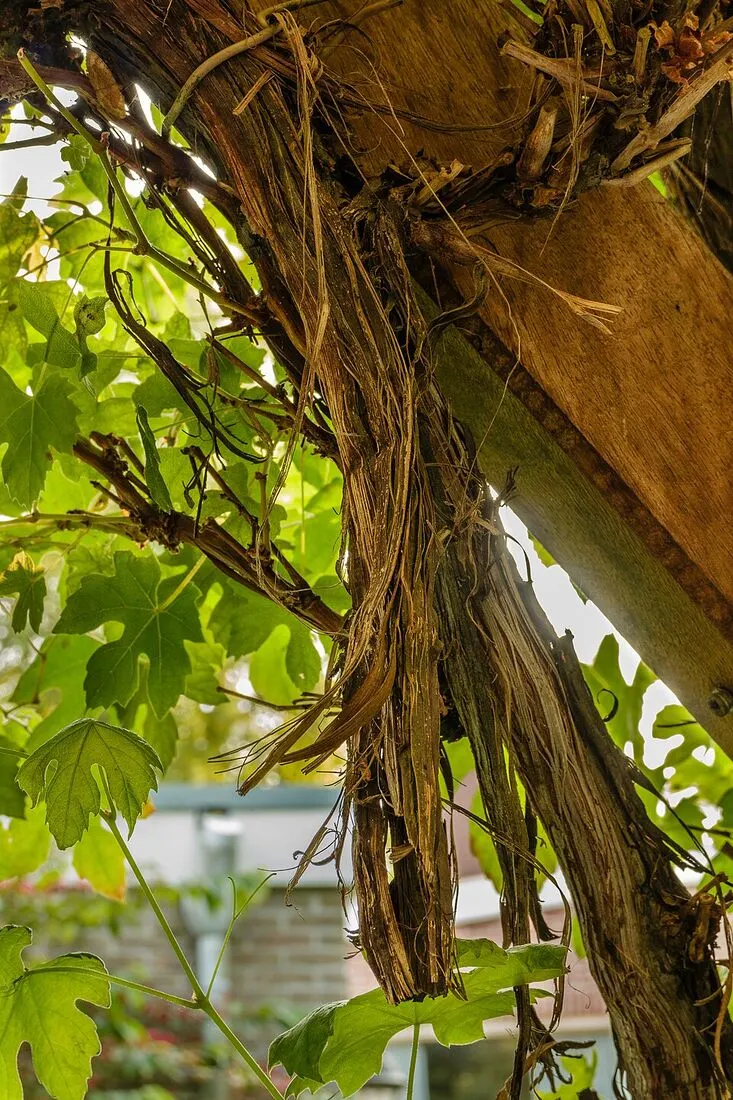
Photo: Agnes Monkelbaan / Wikimedia Commons (CC BY-SA 4.0)
Grape Vine (Vitis vinifera): Ancient cultivated climber whose fruit, seeds, and leaves are packed with resveratrol and antioxidants.
🔍 Quick Facts
| Common name | Grape Vine |
| Other names | Angoor, Draksha (Hindi); Thiratchai (Tamil); Draksha (Sanskrit) |
| Scientific name | Vitis vinifera |
| Plant family | Vitaceae |
| Size | Woody vine, trained on a trellis or pergola |
| Native region | Middle East, Central Asia |
| Climate | Temperate/Mediterranean |
| Ease of growing | Moderate |
| Parts used | Fruit, Seeds, Leaves, Bark |
About Grape Vine
Nashik in Maharashtra is called the "Grape Capital of India", and Maharashtra grows most of the country's table grapes and raisins. Indian grapes are unusual: in the tropical plains, vines are pruned twice a year (the "double pruning, single harvest" system) to get one winter crop. Grapes and dried raisins (munakka) have long been used in Ayurveda as a gentle laxative and tonic.
Botanically known as Vitis vinifera, it belongs to the Vitaceae family. It is native to Middle East, Central Asia and grows best in a temperate/mediterranean climate. The parts most often used are the fruit, seeds, leaves and bark.
Traditional & Ayurvedic Uses
Grape Vine is best known for:
- Antioxidant
- Heart health
- Resveratrol source
- Skin care
- Anti-ageing
Most of these uses come from Ayurveda and folk medicine. Where we know of good clinical evidence, or of a specific safety concern, we say so in the overview, precautions and FAQs on this page.
How Grape Is Used
- Fresh grapes are eaten raw or juiced.
- Munakka (large raisins) soaked overnight are a traditional remedy for constipation.
- Leaves are stuffed and cooked in Mediterranean cuisine.
How to Grow Grape Vine
| ☀️ Sunlight | Full sun, 7–8 hours. |
| 💧 Watering | Regular; reduce watering at fruit ripening for sweeter grapes. |
| 🪴 Soil | Well-drained, slightly alkaline to neutral soil. |
| 🌱 Propagation | Hardwood cuttings, often grafted on resistant rootstocks such as Dogridge. |
| 📅 When to plant (India) | Plant January–February. Fruit harvest February–April in Maharashtra. |
| 🏡 In pots / at home | Possible in a 20-inch container trained over a balcony railing, though yields are small. |
Precautions & Safety
- Grapes are toxic to dogs.
- Commercial grapes are heavily sprayed — wash thoroughly.
- Grape juice is high in sugar.
Frequently Asked Questions
Written by the WhyOnPlanet editorial team · Last updated October 2026