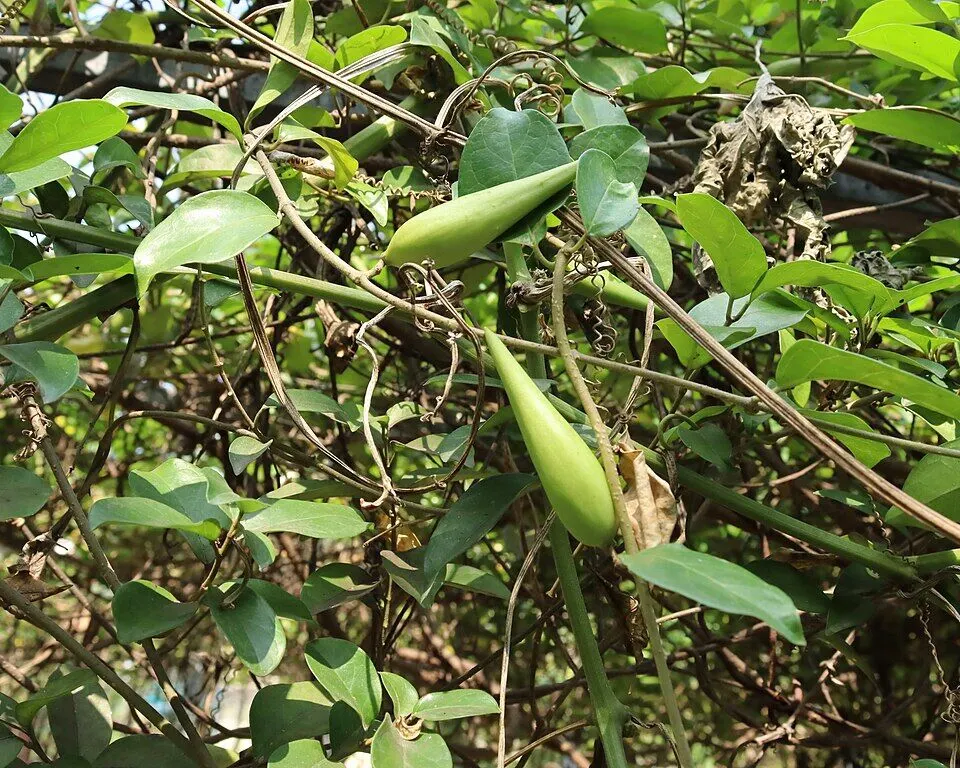
Photo: Hải Vũ Thanh / Wikimedia Commons (CC BY-SA 4.0)
Gurmar (Gymnema) (Gymnema sylvestre): Woody climber whose leaves destroy the taste of sweetness — powerful anti-diabetic herb.
🔍 Quick Facts
| Common name | Gurmar (Gymnema) |
| Other names | Gurmar, Madhunashini (Hindi); Sirukurinjan (Tamil); Podapatri (Telugu) |
| Scientific name | Gymnema sylvestre |
| Plant family | Apocynaceae |
| Size | Woody climber |
| Native region | India, Africa, Australia |
| Climate | Tropical |
| Ease of growing | Moderate |
| Parts used | Leaves |
About Gurmar
Gurmar means "sugar destroyer" in Hindi. Chewing a leaf temporarily blocks your ability to taste sweetness — sugar tastes like sand for up to an hour — thanks to compounds called gymnemic acids. It is a forest climber of the Western Ghats and central India, and it is one of the most widely used Ayurvedic herbs for diabetes support.
Botanically known as Gymnema sylvestre, it belongs to the Apocynaceae family. It is native to India, Africa, Australia and grows best in a tropical climate. The parts most often used are the leaves.
Traditional & Ayurvedic Uses
Gurmar is best known for:
- Blood sugar control
- Sugar craving blocker
- Cholesterol
- Pancreas support
- Weight loss
Most of these uses come from Ayurveda and folk medicine. Where we know of good clinical evidence, or of a specific safety concern, we say so in the overview, precautions and FAQs on this page.
How Gurmar Is Used
- Fresh leaves are chewed to reduce sugar cravings.
- Dried leaf powder or capsules are used for blood sugar support.
- Leaf tea is drunk before meals in traditional practice.
How to Grow Gurmar
| ☀️ Sunlight | Partial shade to full sun. |
| 💧 Watering | Moderate. |
| 🪴 Soil | Well-drained loam. |
| 🌱 Propagation | Stem cuttings or seeds in the monsoon. |
| 📅 When to plant (India) | Plant June–August. |
| 🏡 In pots / at home | Grows in a large pot with a trellis. |
Precautions & Safety
- Can lower blood sugar — combining with insulin or diabetes pills risks hypoglycaemia.
- Not a replacement for prescribed diabetes treatment.
- Avoid in pregnancy and breastfeeding.
Frequently Asked Questions
Further Reading on Gurmar
Written by the WhyOnPlanet editorial team · Last updated October 2026