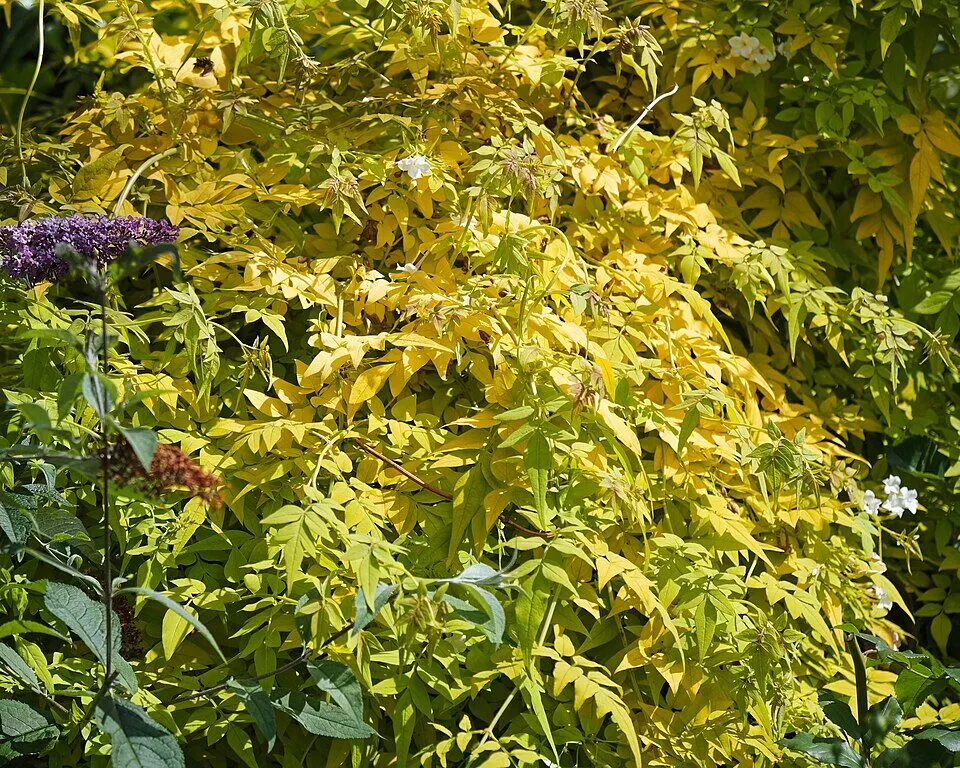
Photo: Acabashi / Wikimedia Commons (CC BY-SA 4.0)
Jasmine (Climbing) (Jasminum officinale): Fragrant climbing jasmine cherished for aromatherapy, stress relief, and skin care benefits.
🔍 Quick Facts
| Common name | Jasmine (Climbing) |
| Other names | Chameli (Hindi — mainly for J. grandiflorum); Poet's jasmine, Common jasmine |
| Scientific name | Jasminum officinale |
| Plant family | Oleaceae (olive family) |
| Size | Twining climber, 3–10 m |
| Native region | Southwest Asia |
| Climate | Tropical/Sub-tropical |
| Ease of growing | Moderate |
| Parts used | Flowers, Leaves, Oil |
About Jasmine
Common or poet's jasmine (Jasminum officinale) is a vigorous climber with clusters of white star-shaped flowers. It is a temperate cousin of India's mogra and chameli and is grown more in the hills than the plains. Its essential oil, along with that of Jasminum grandiflorum, is one of the most expensive in perfumery — it takes thousands of flowers to make a few millilitres.
Botanically known as Jasminum officinale, it belongs to the Oleaceae family. It is native to Southwest Asia and grows best in a tropical/sub-tropical climate. The parts most often used are the flowers, leaves and oil.
Traditional & Ayurvedic Uses
Jasmine is best known for:
- Aromatherapy
- Stress relief
- Skin care
- Hair oil
- Anxiety relief
Most of these uses come from Ayurveda and folk medicine. Where we know of good clinical evidence, or of a specific safety concern, we say so in the overview, precautions and FAQs on this page.
How Jasmine Is Used
- Flowers are used in perfumery, garlands and hair adornment.
- Jasmine-infused oil is used in aromatherapy massage.
- Flowers scent jasmine tea in some traditions.
How to Grow Jasmine
| ☀️ Sunlight | Full sun to partial shade. |
| 💧 Watering | Regular watering; reduce in winter. |
| 🪴 Soil | Fertile, well-drained soil. |
| 🌱 Propagation | Semi-hardwood cuttings or layering. |
| 📅 When to plant (India) | Plant February–March. Flowers in summer. |
| 🏡 In pots / at home | Grows in a 14-inch pot with a trellis; best suited to cooler climates. |
Precautions & Safety
- Jasmine absolute can cause skin sensitisation — always dilute.
- Do not confuse with "yellow jasmine" (Gelsemium), which is highly poisonous.
Frequently Asked Questions
Written by the WhyOnPlanet editorial team · Last updated October 2026