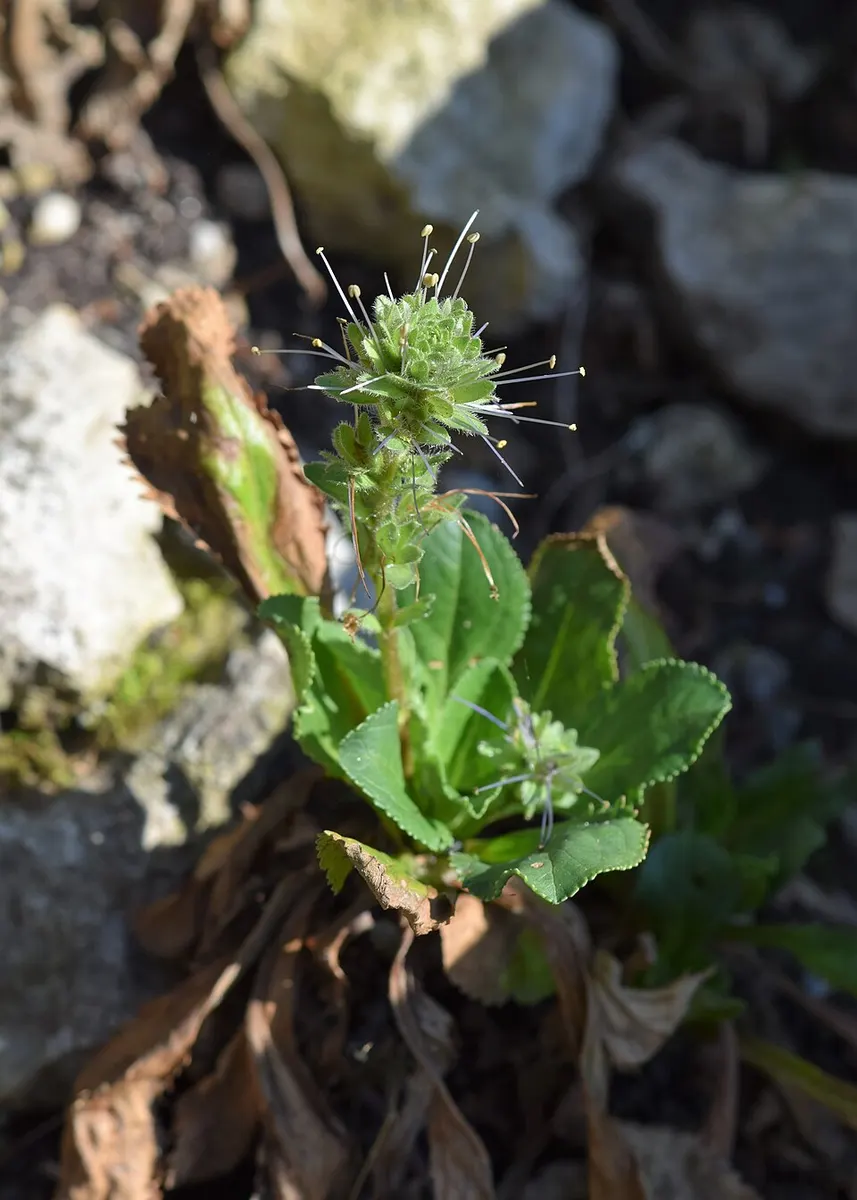
Photo: Krzysztof Ziarnek, Kenraiz / Wikimedia Commons (CC BY-SA 4.0)
Kutki (Picrorhiza) (Picrorhiza kurroa): A powerful Himalayan herb revered as one of the best liver and immune-system tonics in Ayurveda.
🔍 Quick Facts
| Common name | Kutki (Picrorhiza) |
| Other names | Kutki, Katuka (Hindi, Sanskrit); Picrorhiza |
| Scientific name | Picrorhiza kurroa |
| Plant family | Plantaginaceae |
| Size | Small perennial herb, 5–15 cm |
| Native region | Himalayas, Northwestern China |
| Climate | Alpine/Himalayan |
| Ease of growing | Slow |
| Parts used | Rhizome, Root |
About Kutki
Kutki grows only at high altitudes of 3,000–5,000 m in the Himalaya, from Kashmir to Sikkim. It is extremely bitter, and Ayurveda uses its rhizome for the liver and for fever. Because of heavy, unregulated collection from the wild, kutki is listed as endangered, and supply is now increasingly from cultivation in Uttarakhand and Himachal Pradesh.
Botanically known as Picrorhiza kurroa, it belongs to the Plantaginaceae family. It is native to Himalayas, Northwestern China and grows best in a alpine/himalayan climate. The parts most often used are the rhizome and root.
Traditional & Ayurvedic Uses
Kutki is best known for:
- Liver diseases
- Autoimmune support
- Fever
- Asthma
- Antioxidant
Most of these uses come from Ayurveda and folk medicine. Where we know of good clinical evidence, or of a specific safety concern, we say so in the overview, precautions and FAQs on this page.
How Kutki Is Used
- Rhizome powder is used in Ayurvedic liver formulations such as Arogyavardhini vati.
- Bitter decoctions are used traditionally for fever and indigestion.
How to Grow Kutki
| ☀️ Sunlight | Partial sun; cool alpine conditions. |
| 💧 Watering | Moist, well-drained soil. |
| 🪴 Soil | Rich, humus soil of alpine slopes. |
| 🌱 Propagation | Rhizome cuttings or seeds in high-altitude nurseries. |
| 📅 When to plant (India) | Grows only above about 2,500 m; not suitable for the plains. |
| 🏡 In pots / at home | Not practical outside the Himalaya. |
Precautions & Safety
- Can cause diarrhoea, nausea and cramps.
- May interact with immunosuppressants.
- Buy only from sustainable, cultivated sources — wild kutki is endangered.
Frequently Asked Questions
Written by the WhyOnPlanet editorial team · Last updated October 2026