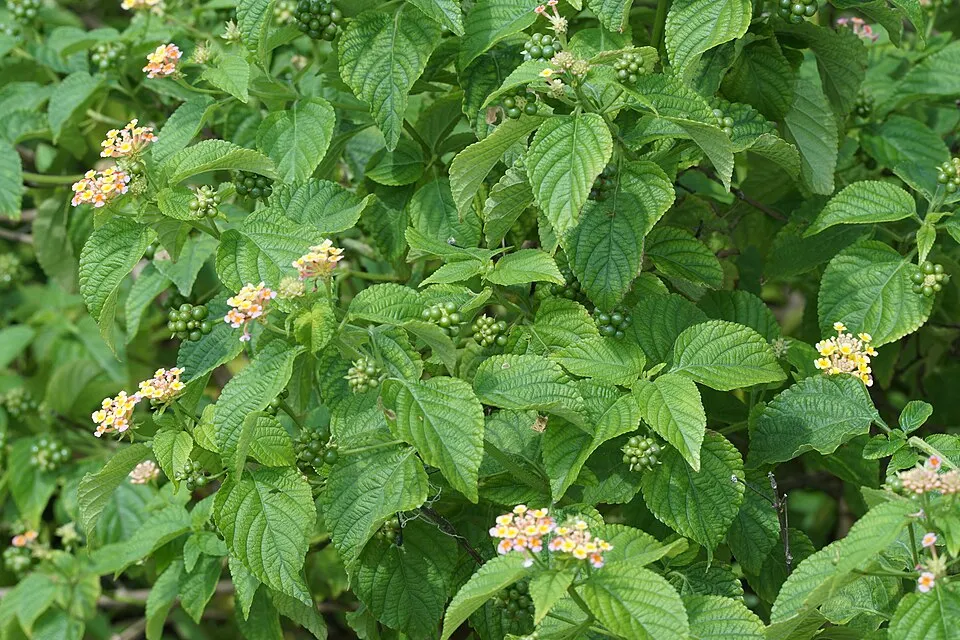
Photo: Vengolis / Wikimedia Commons (CC BY-SA 4.0)
Lantana (Lantana camara): Colourful flowering shrub with traditional uses for skin ailments, fever, and respiratory issues.
🔍 Quick Facts
| Common name | Lantana |
| Other names | Raimuniya, Ghaneri (Hindi); Unnichedi (Malayalam); Tantani (Marathi) |
| Scientific name | Lantana camara |
| Plant family | Verbenaceae |
| Size | 1–2 m sprawling shrub |
| Native region | Central & South America |
| Climate | Tropical |
| Ease of growing | Very Fast |
| Parts used | Leaves, Flowers, Bark |
About Lantana
Lantana was introduced to India as a garden plant in the early 1800s and has since become one of the country's worst invasive weeds, covering an estimated 40% of India's forests and choking native undergrowth in tiger reserves. Its colourful flower clusters attract butterflies, and it has some folk medicinal uses, but it is toxic to livestock. Sterile hybrid varieties are the responsible choice for gardens.
Botanically known as Lantana camara, it belongs to the Verbenaceae family. It is native to Central & South America and grows best in a tropical climate. The parts most often used are the leaves, flowers and bark.
Traditional & Ayurvedic Uses
Lantana is best known for:
- Skin ailments
- Fever
- Wound antiseptic
- Respiratory relief
- Rheumatism
Most of these uses come from Ayurveda and folk medicine. Where we know of good clinical evidence, or of a specific safety concern, we say so in the overview, precautions and FAQs on this page.
How Lantana Is Used
- Grown as a butterfly-attracting ornamental and hedge.
- Leaves are used in folk medicine for skin wounds and as a mosquito-repellent smoke.
- Lantana stems are used by some forest communities to make furniture — turning the weed into income.
How to Grow Lantana
| ☀️ Sunlight | Full sun. |
| 💧 Watering | Very drought tolerant; water only in long dry spells. |
| 🪴 Soil | Any soil, including poor and rocky ground. |
| 🌱 Propagation | Cuttings root easily. Avoid letting birds spread the berries — remove spent flower heads. |
| 📅 When to plant (India) | Plant any time; flowers almost year-round. |
| 🏡 In pots / at home | Dwarf and trailing hybrids are good in pots and hanging baskets. |
Precautions & Safety
- Unripe berries and leaves are toxic to children, pets and livestock.
- Highly invasive — do not plant near forests or farmland, and dispose of seeds carefully.
- Leaves can irritate sensitive skin.
Frequently Asked Questions
Further Reading on Lantana
Written by the WhyOnPlanet editorial team · Last updated October 2026