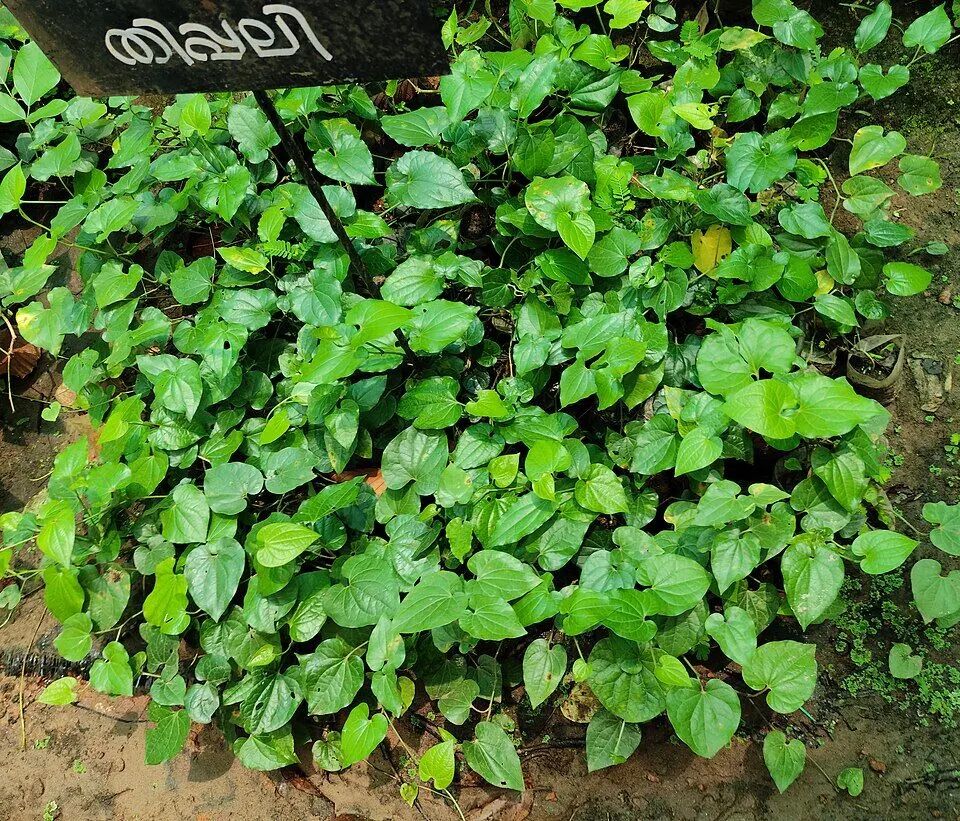
Photo: Vis M / Wikimedia Commons (CC BY-SA 4.0)
Long Pepper (Pippali) (Piper longum): One of Trikatu — an Ayurvedic spice-climber that kindles digestive fire and clears the respiratory tract.
🔍 Quick Facts
| Common name | Long Pepper (Pippali) |
| Other names | Pippali, Pipli (Hindi); Thippili (Tamil); Pippallu (Telugu) |
| Scientific name | Piper longum |
| Plant family | Piperaceae (pepper family) |
| Size | Slender creeping vine |
| Native region | India, Sri Lanka |
| Climate | Tropical/Humid |
| Ease of growing | Moderate |
| Parts used | Fruit, Root |
About Long Pepper
Long pepper was the pepper of ancient Rome before black pepper replaced it. Its catkin-like fruit spikes are hotter and sweeter than black pepper. In Ayurveda, pippali is one of the three ingredients of Trikatu ("three pungents") with black pepper and ginger, and it is central to remedies for cough and digestion. Its piperine content is also studied for improving the absorption of other compounds.
Botanically known as Piper longum, it belongs to the Piperaceae family. It is native to India, Sri Lanka and grows best in a tropical/humid climate. The parts most often used are the fruit and root.
Traditional & Ayurvedic Uses
Long Pepper is best known for:
- Digestion
- Respiratory health
- Liver stimulant
- Bioavailability enhancer
- Cough & cold
Most of these uses come from Ayurveda and folk medicine. Where we know of good clinical evidence, or of a specific safety concern, we say so in the overview, precautions and FAQs on this page.
How Long Is Used
- Dried, powdered spikes are mixed with honey for cough in traditional practice.
- A key ingredient of Trikatu churna and Sitopaladi churna.
- Used as a spice in pickles and some North Indian and Ethiopian dishes.
How to Grow Long Pepper
| ☀️ Sunlight | Partial shade; a forest-floor plant. |
| 💧 Watering | Keep moist; it needs high humidity. |
| 🪴 Soil | Rich, loose, well-drained soil with leaf compost. |
| 🌱 Propagation | Stem cuttings in the monsoon. |
| 📅 When to plant (India) | Plant May–June. Spikes are harvested when dark green, then dried. |
| 🏡 In pots / at home | Can be grown in a pot in a shaded, humid spot. |
Precautions & Safety
- Hot and pungent — can aggravate acidity, ulcers and gastritis.
- Avoid in pregnancy.
- May increase the absorption of some medicines; check with your doctor.
Frequently Asked Questions
Further Reading on Long Pepper
Written by the WhyOnPlanet editorial team · Last updated October 2026