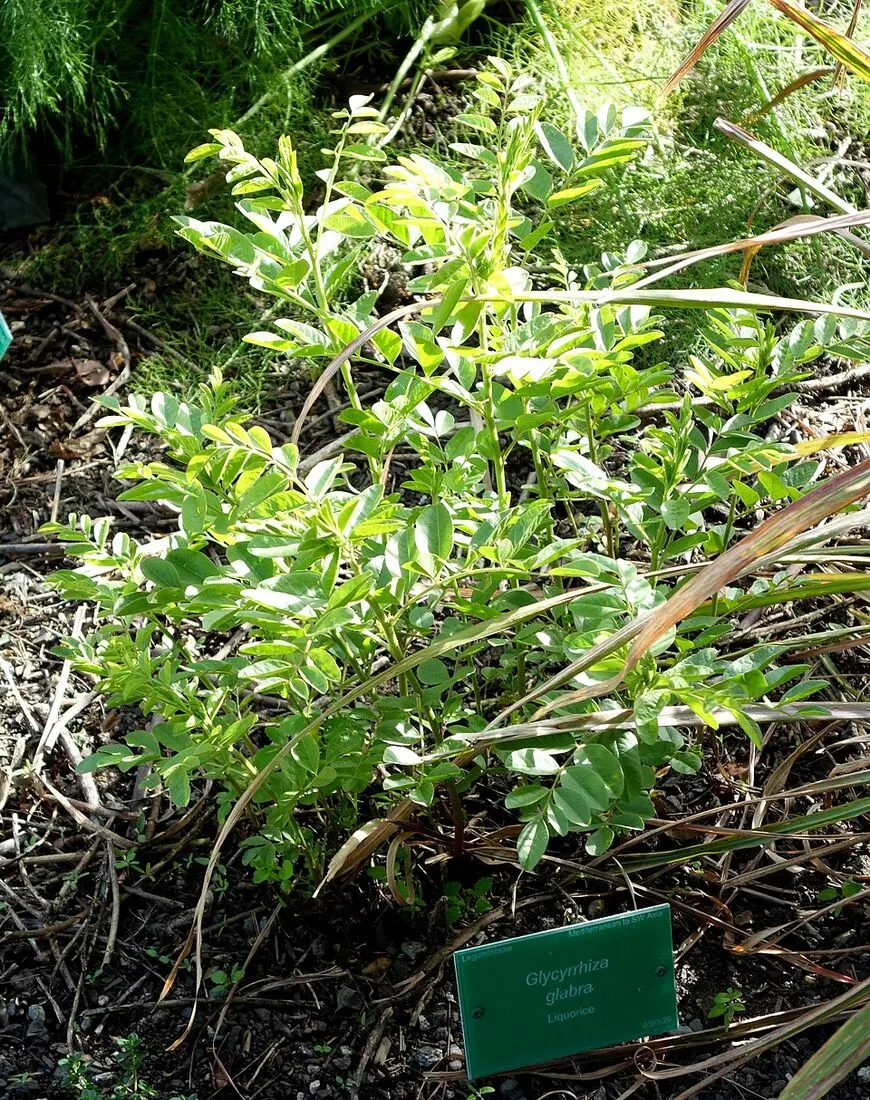
Mulethi (Liquorice) (Glycyrrhiza glabra): Naturally sweet Ayurvedic root that soothes the throat, supports the liver, and fights inflammation.
🔍 Quick Facts
| Common name | Mulethi (Liquorice) |
| Other names | Mulethi, Jethimadh (Hindi); Athimadhuram (Tamil); Yashtimadhu (Sanskrit) |
| Scientific name | Glycyrrhiza glabra |
| Plant family | Fabaceae (legume family) |
| Size | 1–1.5 m perennial with deep roots |
| Native region | Southern Europe, Central Asia |
| Climate | Mediterranean/Sub-tropical |
| Ease of growing | Moderate |
| Parts used | Root |
About Mulethi
Mulethi root is naturally about 50 times sweeter than sugar because of glycyrrhizin. It is one of the most frequently used ingredients in Ayurvedic and Chinese medicine, mainly for sore throats, cough and acidity. Most mulethi used in India is imported, as the plant prefers the cooler, drier climate of Central Asia and the Mediterranean, although it is cultivated in Punjab and Jammu.
Botanically known as Glycyrrhiza glabra, it belongs to the Fabaceae family. It is native to Southern Europe, Central Asia and grows best in a mediterranean/sub-tropical climate. The parts most often used are the root.
Traditional & Ayurvedic Uses
Mulethi is best known for:
- Sore throat
- Cough
- Liver protection
- Gastric ulcers
- Adrenal support
Most of these uses come from Ayurveda and folk medicine. Where we know of good clinical evidence, or of a specific safety concern, we say so in the overview, precautions and FAQs on this page.
How Mulethi Is Used
- A stick of dried root is chewed or sucked for a sore throat.
- Root powder is boiled in tea or kadha for cough.
- DGL (deglycyrrhizinated liquorice) is used for acidity without the glycyrrhizin side effects.
How to Grow Mulethi
| ☀️ Sunlight | Full sun. |
| 💧 Watering | Moderate. |
| 🪴 Soil | Deep, sandy, well-drained soil so the long roots can grow. |
| 🌱 Propagation | Root or rhizome cuttings. |
| 📅 When to plant (India) | Plant February–March; roots are harvested after 2–3 years. |
| 🏡 In pots / at home | Difficult in pots because of its deep roots. |
Precautions & Safety
- Regular use for more than a few weeks can raise blood pressure, lower potassium and cause fluid retention.
- Avoid with high blood pressure, heart or kidney disease, and in pregnancy.
- Interacts with diuretics, steroids and digoxin.
Frequently Asked Questions
Written by the WhyOnPlanet editorial team · Last updated October 2026