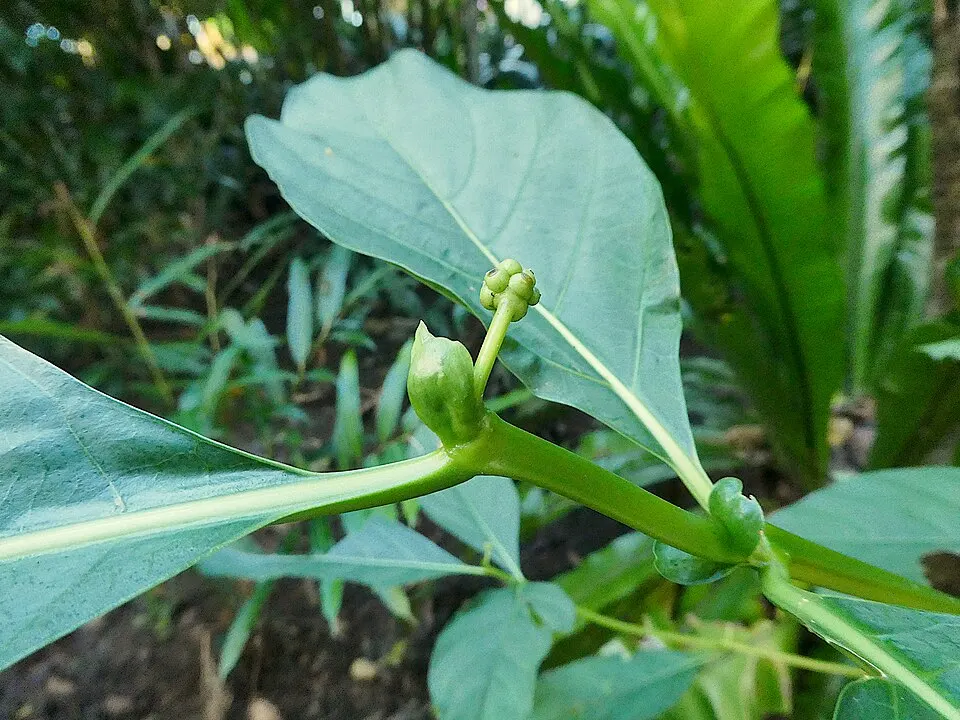
Photo: Steve Fitzgerald / Wikimedia Commons (CC BY-SA 4.0)
Noni (Morinda citrifolia): Pacific island superfruit used traditionally for pain relief, immunity, and cancer prevention.
🔍 Quick Facts
| Common name | Noni |
| Other names | Noni, Indian mulberry (English); Aal, Bartundi (Hindi); Nuna (Tamil) |
| Scientific name | Morinda citrifolia |
| Plant family | Rubiaceae (coffee family) |
| Size | 3–10 m shrub or small tree |
| Native region | Southeast Asia, Pacific |
| Climate | Tropical |
| Ease of growing | Fast |
| Parts used | Fruit, Leaves, Root, Seeds |
About Noni
Noni is a small tree of coastal Asia and the Pacific with lumpy, pale fruit that smells strongly of blue cheese when ripe. Its roots gave the traditional red "aal" dye in India. Noni juice was heavily marketed worldwide in the 2000s as a cure-all; the scientific evidence does not support most of those claims, and some reports have linked it to liver problems.
Botanically known as Morinda citrifolia, it belongs to the Rubiaceae family. It is native to Southeast Asia, Pacific and grows best in a tropical climate. The parts most often used are the fruit, leaves, root and seeds.
Traditional & Ayurvedic Uses
Noni is best known for:
- Immunity
- Anti-cancer (research)
- Joint pain
- High blood pressure
- Antioxidant
Most of these uses come from Ayurveda and folk medicine. Where we know of good clinical evidence, or of a specific safety concern, we say so in the overview, precautions and FAQs on this page.
How Noni Is Used
- Fruit juice, often fermented, is drunk in small amounts.
- Leaves are applied as a poultice in Pacific traditional medicine.
- Roots were used to make the red aal dye.
How to Grow Noni
| ☀️ Sunlight | Full sun to partial shade. |
| 💧 Watering | Moderate; tolerates both drought and salty coastal conditions. |
| 🪴 Soil | Adapts widely, including sandy and saline soils. |
| 🌱 Propagation | Seeds or cuttings. |
| 📅 When to plant (India) | Plant in the monsoon; fruits year-round. |
| 🏡 In pots / at home | Can be grown in a large container in warm areas. |
Precautions & Safety
- High potassium — unsafe for people with kidney disease or on potassium-sparing drugs.
- Case reports link noni juice to liver injury.
- Claims that it cures cancer are not supported by evidence.
Frequently Asked Questions
Written by the WhyOnPlanet editorial team · Last updated October 2026