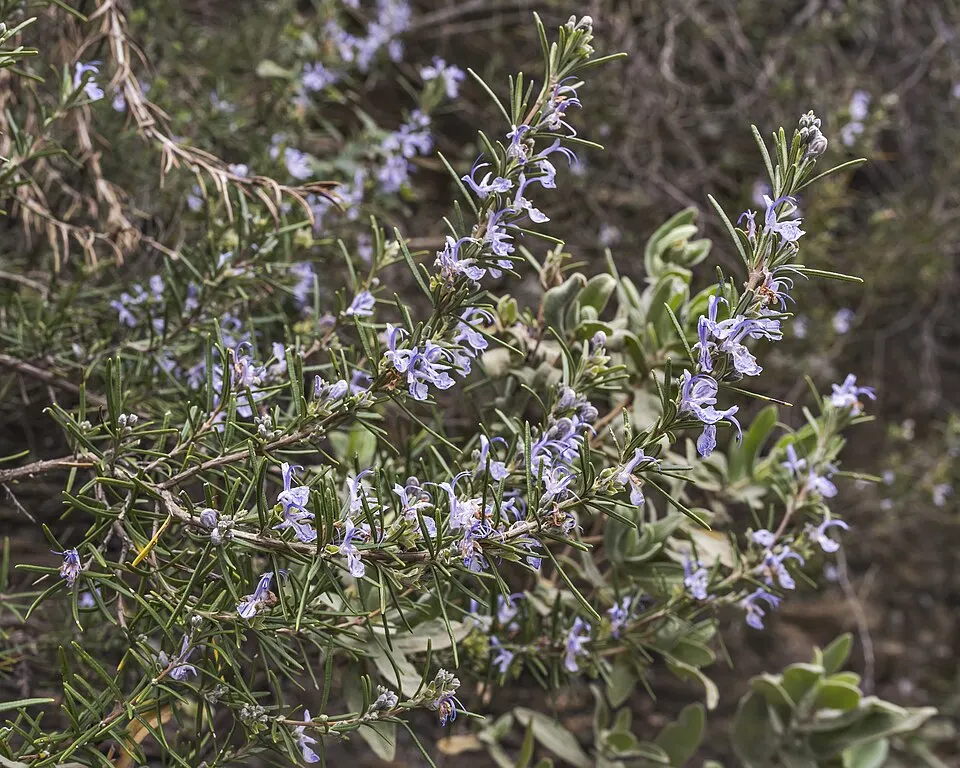
Photo: Christian Ferrer / Wikimedia Commons (CC BY 4.0)
Rosemary (Salvia rosmarinus): Aromatic Mediterranean herb linked to improved memory, circulation, and hair growth.
🔍 Quick Facts
| Common name | Rosemary |
| Other names | Rosemary (no common Hindi name); Rusmari |
| Scientific name | Salvia rosmarinus |
| Plant family | Lamiaceae (mint family) |
| Size | 60–150 cm woody evergreen shrub |
| Native region | Mediterranean |
| Climate | Mediterranean |
| Ease of growing | Moderate |
| Parts used | Leaves, Flowers, Oil |
About Rosemary
Rosemary is a Mediterranean herb that has become popular in India through hair-care trends and continental cooking. Its needle-like leaves contain rosmarinic acid and carnosic acid, both strong antioxidants. Because it comes from a dry, cool climate, rosemary is one of the trickier herbs to keep alive in humid Indian plains — it grows far better in hill stations, Bengaluru or Pune.
Botanically known as Salvia rosmarinus, it belongs to the Lamiaceae family. It is native to Mediterranean and grows best in a mediterranean climate. The parts most often used are the leaves, flowers and oil.
Traditional & Ayurvedic Uses
Rosemary is best known for:
- Memory boost
- Hair growth
- Circulation
- Anti-inflammatory
- Antioxidant
Most of these uses come from Ayurveda and folk medicine. Where we know of good clinical evidence, or of a specific safety concern, we say so in the overview, precautions and FAQs on this page.
How Rosemary Is Used
- Fresh or dried sprigs flavour roast vegetables, potatoes, bread and soups.
- Rosemary water (leaves boiled in water) is used as a hair rinse.
- Rosemary oil is diluted in a carrier oil for scalp massage.
How to Grow Rosemary
| ☀️ Sunlight | Full sun, 6–8 hours. |
| 💧 Watering | Water sparingly — only when the top half of the pot is dry. Overwatering is the most common cause of death. |
| 🪴 Soil | Sandy, gritty, fast-draining soil; add sand or perlite to the potting mix. |
| 🌱 Propagation | Softwood cuttings (10 cm) rooted in a sand-cocopeat mix; seeds are slow and unreliable. |
| 📅 When to plant (India) | Plant October–February in the plains to establish before summer heat and monsoon. |
| 🏡 In pots / at home | Terracotta pots are best because they dry out quickly. Shelter from heavy monsoon rain. |
Precautions & Safety
- Undiluted essential oil can irritate the skin and should not be swallowed.
- Avoid large medicinal doses in pregnancy and in people with epilepsy.
Frequently Asked Questions
Further Reading on Rosemary
Written by the WhyOnPlanet editorial team · Last updated October 2026