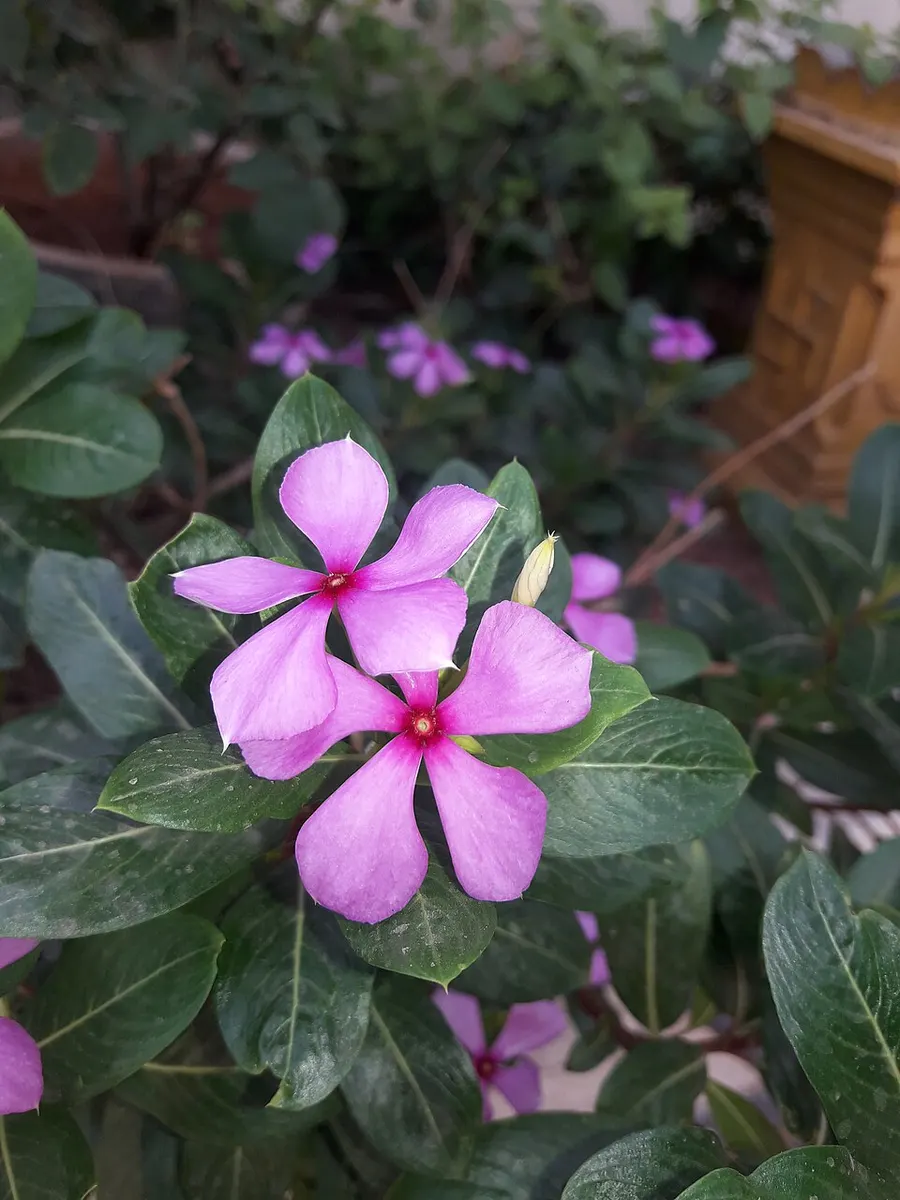
Periwinkle (Sadabahar) (Catharanthus roseus): Cheerful flowering shrub known for anti-diabetic properties and cancer-treatment compounds.
🔍 Quick Facts
| Common name | Periwinkle (Sadabahar) |
| Other names | Sadabahar, Nayantara (Hindi, Bengali); Nithyakalyani (Tamil); Madagascar periwinkle |
| Scientific name | Catharanthus roseus |
| Plant family | Apocynaceae |
| Size | 30–90 cm |
| Native region | Madagascar |
| Climate | Tropical |
| Ease of growing | Easy |
| Parts used | Leaves, Flowers, Roots |
About Periwinkle
"Sadabahar" means evergreen, and this tough little plant flowers through heat, drought and neglect. It is a genuine pharmaceutical plant: vinblastine and vincristine, two chemotherapy drugs still used for leukaemia and lymphoma, were isolated from it in the 1950s. Those compounds are extracted industrially, however — the plant itself is toxic and should not be used to self-treat.
Botanically known as Catharanthus roseus, it belongs to the Apocynaceae family. It is native to Madagascar and grows best in a tropical climate. The parts most often used are the leaves, flowers and roots.
Traditional & Ayurvedic Uses
Periwinkle is best known for:
- Blood sugar control
- Cancer compounds
- Wound healing
- Skin diseases
- Hypertension
Most of these uses come from Ayurveda and folk medicine. Where we know of good clinical evidence, or of a specific safety concern, we say so in the overview, precautions and FAQs on this page.
How Periwinkle Is Used
- Grown as a hardy, low-maintenance flowering border plant.
- Industrially processed as the source of vinca alkaloid cancer drugs.
- Leaves are used in folk remedies for diabetes — a practice doctors warn against.
How to Grow Periwinkle
| ☀️ Sunlight | Full sun. |
| 💧 Watering | Light; let the soil dry between waterings. Overwatering causes root rot. |
| 🪴 Soil | Sandy, well-drained soil. |
| 🌱 Propagation | Self-seeds freely; cuttings also root easily. |
| 📅 When to plant (India) | Sow February–April or June–July. Flowers all year in warm climates. |
| 🏡 In pots / at home | Perfect for small pots, window boxes and borders. |
Precautions & Safety
- All parts are toxic if eaten; can cause low blood pressure, nerve damage and other serious effects.
- Do not use leaves to self-treat diabetes or cancer.
- Keep away from pets and children.
Frequently Asked Questions
Further Reading on Periwinkle
Written by the WhyOnPlanet editorial team · Last updated October 2026