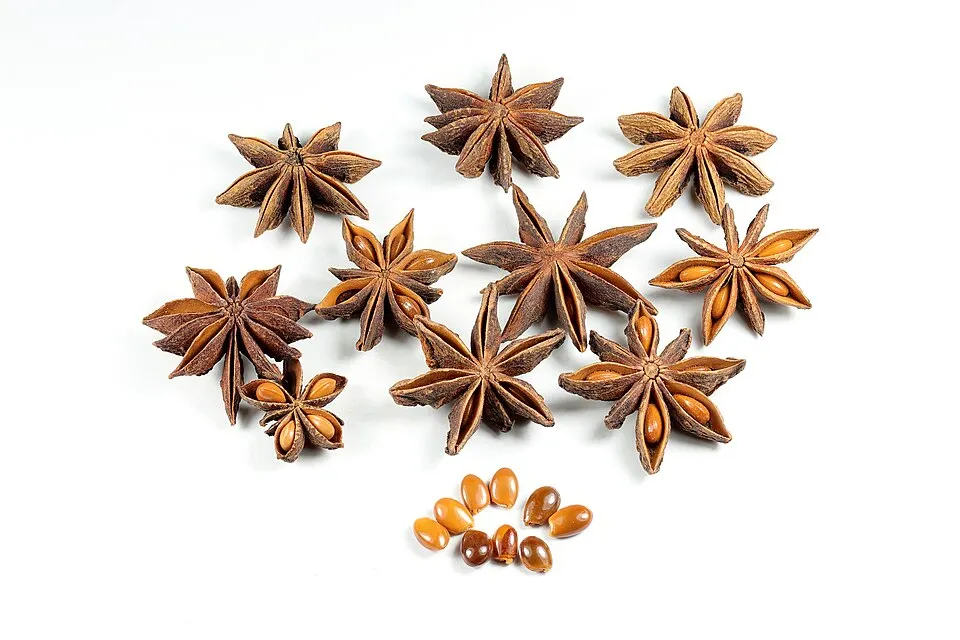
Photo: Sanjay Acharya / Wikimedia Commons (CC BY-SA 4.0)
Star Anise (Illicium verum): Star-shaped spice rich in shikimic acid — antiviral, antifungal, and digestive properties.
🔍 Quick Facts
| Common name | Star Anise |
| Other names | Chakra phool, Badiyan (Hindi); Anasi poo (Tamil) |
| Scientific name | Illicium verum |
| Plant family | Schisandraceae |
| Size | 8–15 m evergreen tree |
| Native region | Southwest China, Vietnam |
| Climate | Tropical |
| Ease of growing | Slow |
| Parts used | Fruit (star pod), Oil |
About Star Anise
Star anise is the star-shaped fruit of an evergreen tree from southern China and Vietnam, and is used in Indian biryanis and garam masala. It is rich in shikimic acid, which became famous as the starting material for the flu drug oseltamivir (Tamiflu). Home cooking amounts do not have an antiviral effect. India imports nearly all its star anise.
Botanically known as Illicium verum, it belongs to the Schisandraceae family. It is native to Southwest China, Vietnam and grows best in a tropical climate. The parts most often used are the fruit (star pod) and oil.
Traditional & Ayurvedic Uses
Star Anise is best known for:
- Antiviral
- Digestion
- Flu remedy
- Antifungal
- Antioxidant
Most of these uses come from Ayurveda and folk medicine. Where we know of good clinical evidence, or of a specific safety concern, we say so in the overview, precautions and FAQs on this page.
How Star Is Used
- Whole stars flavour biryani, pulao, garam masala and chai.
- Used in Chinese five-spice powder and pho.
- Star anise tea is a traditional digestive.
How to Grow Star Anise
| ☀️ Sunlight | Partial shade. |
| 💧 Watering | Regular moisture. |
| 🪴 Soil | Rich, acidic, well-drained soil. |
| 🌱 Propagation | Seeds. |
| 📅 When to plant (India) | Grows only in cool, humid subtropical hills. |
| 🏡 In pots / at home | Not practical in most of India. |
Precautions & Safety
- Japanese star anise (Illicium anisatum) looks almost identical and is poisonous — buy from trusted sources.
- Never give star anise tea to infants; contaminated teas have caused poisoning.
Frequently Asked Questions
Written by the WhyOnPlanet editorial team · Last updated October 2026