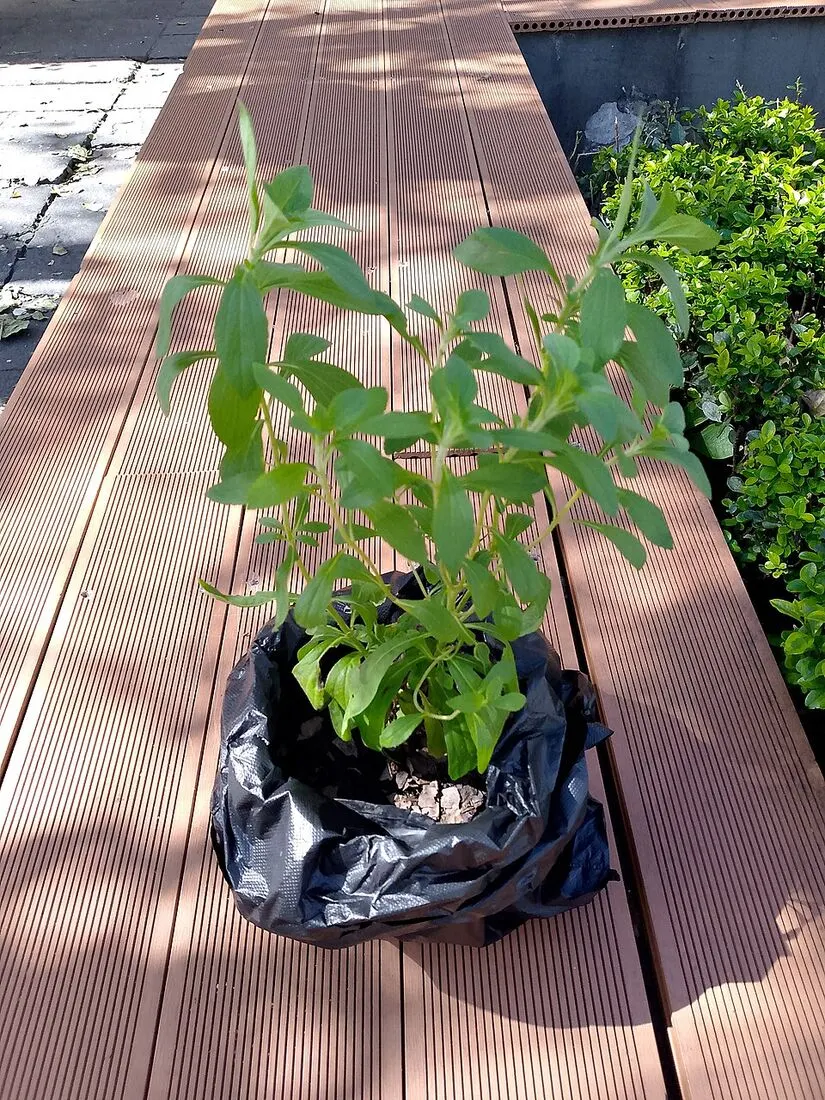
Photo: Jorge Auz Salazar / Wikimedia Commons (CC BY-SA 4.0)
Stevia (Stevia rebaudiana): Natural zero-calorie sweetener from South America — ideal for diabetics and weight management.
🔍 Quick Facts
| Common name | Stevia |
| Other names | Meethi tulsi, Madhu patra (Hindi); Sweet leaf |
| Scientific name | Stevia rebaudiana |
| Plant family | Asteraceae (daisy family) |
| Size | 40–80 cm perennial |
| Native region | South America |
| Climate | Tropical/Sub-tropical |
| Ease of growing | Moderate |
| Parts used | Leaves |
About Stevia
Stevia is a small herb from Paraguay whose leaves contain steviol glycosides — compounds 200–300 times sweeter than sugar but with almost no calories. It has been grown commercially in India since the 2000s, and a single pot on a sunny balcony can supply enough fresh leaves to sweeten your daily tea. Dried homegrown leaves have a faint liquorice aftertaste that refined stevia powders remove.
Botanically known as Stevia rebaudiana, it belongs to the Asteraceae family. It is native to South America and grows best in a tropical/sub-tropical climate. The parts most often used are the leaves.
Traditional & Ayurvedic Uses
Stevia is best known for:
- Natural sweetener
- Blood sugar control
- Weight management
- Dental health
- Blood pressure
Most of these uses come from Ayurveda and folk medicine. Where we know of good clinical evidence, or of a specific safety concern, we say so in the overview, precautions and FAQs on this page.
How Stevia Is Used
- 2–3 fresh leaves sweeten a cup of tea or coffee.
- Dried leaves are ground to a green powder for desserts and drinks.
- Leaves can be steeped in water to make a homemade liquid sweetener.
How to Grow Stevia
| ☀️ Sunlight | Full sun; light afternoon shade in very hot areas. |
| 💧 Watering | Keep soil evenly moist but never soggy — roots rot easily. |
| 🪴 Soil | Light, sandy loam with good drainage and moderate compost. |
| 🌱 Propagation | Stem cuttings root readily; seeds have low germination rates. |
| 📅 When to plant (India) | Plant February–April or after the monsoon (September–October). |
| 🏡 In pots / at home | A 10-inch pot is enough. Pinch tips often and remove flowers to keep the leaves sweet. |
Precautions & Safety
- Generally considered safe as a sweetener; may cause bloating in some people.
- Commercial stevia blends often contain sugar alcohols such as erythritol — read labels.
- People allergic to ragweed or marigolds may react to it.
Frequently Asked Questions
Written by the WhyOnPlanet editorial team · Last updated October 2026