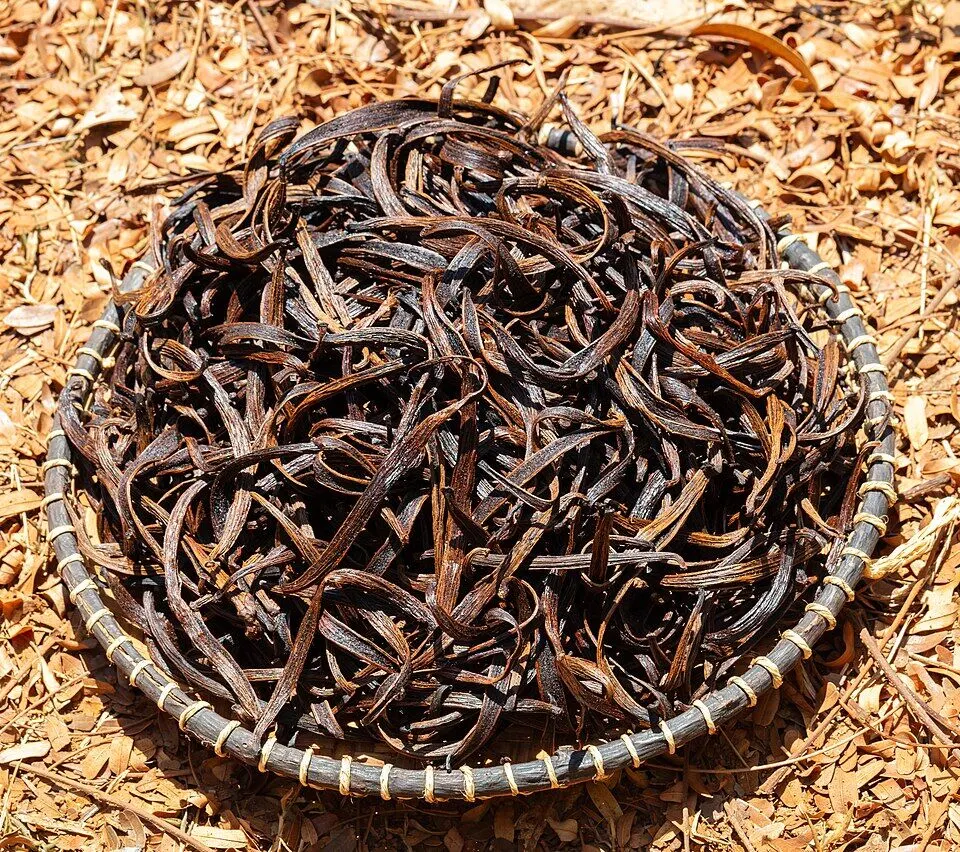
Photo: Diego Delso / Wikimedia Commons (CC BY-SA 4.0)
Vanilla (Vanilla planifolia): World's most popular flavouring — an orchid climber with antioxidant and mood-lifting properties.
🔍 Quick Facts
| Common name | Vanilla |
| Other names | Vanilla (Hindi, Malayalam); Vanila |
| Scientific name | Vanilla planifolia |
| Plant family | Orchidaceae (orchid family) |
| Size | Climbing orchid vine, up to 15 m |
| Native region | Mexico |
| Climate | Tropical/Humid |
| Ease of growing | Slow |
| Parts used | Pods (beans) |
About Vanilla
Vanilla is the only orchid grown commercially for food. Its flowers open for a single morning and in India must be pollinated by hand, because the native Mexican bee is absent. After harvest, the green beans are "cured" — sweated and dried for months — to develop their flavour. Kerala and Karnataka grow most of India's vanilla, which is the world's second most expensive spice after saffron.
Botanically known as Vanilla planifolia, it belongs to the Orchidaceae family. It is native to Mexico and grows best in a tropical/humid climate. The parts most often used are the pods (beans).
Traditional & Ayurvedic Uses
Vanilla is best known for:
- Flavouring
- Antioxidant
- Mood enhancer
- Skin care
- Anti-inflammatory
Most of these uses come from Ayurveda and folk medicine. Where we know of good clinical evidence, or of a specific safety concern, we say so in the overview, precautions and FAQs on this page.
How Vanilla Is Used
- Cured beans are split and scraped to flavour desserts, ice cream and baked goods.
- Beans are soaked in alcohol to make vanilla extract.
- Vanilla is used in perfumes and aromatherapy.
How to Grow Vanilla
| ☀️ Sunlight | Filtered light, about 50% shade. |
| 💧 Watering | Keep humid and moist, but never waterlogged. |
| 🪴 Soil | Loose, humus-rich mulch; it grows on a support tree such as Glyricidia. |
| 🌱 Propagation | Stem cuttings 60–120 cm long. |
| 📅 When to plant (India) | Plant in the monsoon. Flowers in January–March; beans ripen 8–9 months later. |
| 🏡 In pots / at home | Can be grown in a large pot with a moss pole in a humid greenhouse or very humid region. |
Precautions & Safety
- Most "vanilla essence" is synthetic vanillin — check the label.
- Contact with fresh vanilla sap can cause skin irritation in farm workers.
Frequently Asked Questions
Further Reading on Vanilla
Written by the WhyOnPlanet editorial team · Last updated October 2026