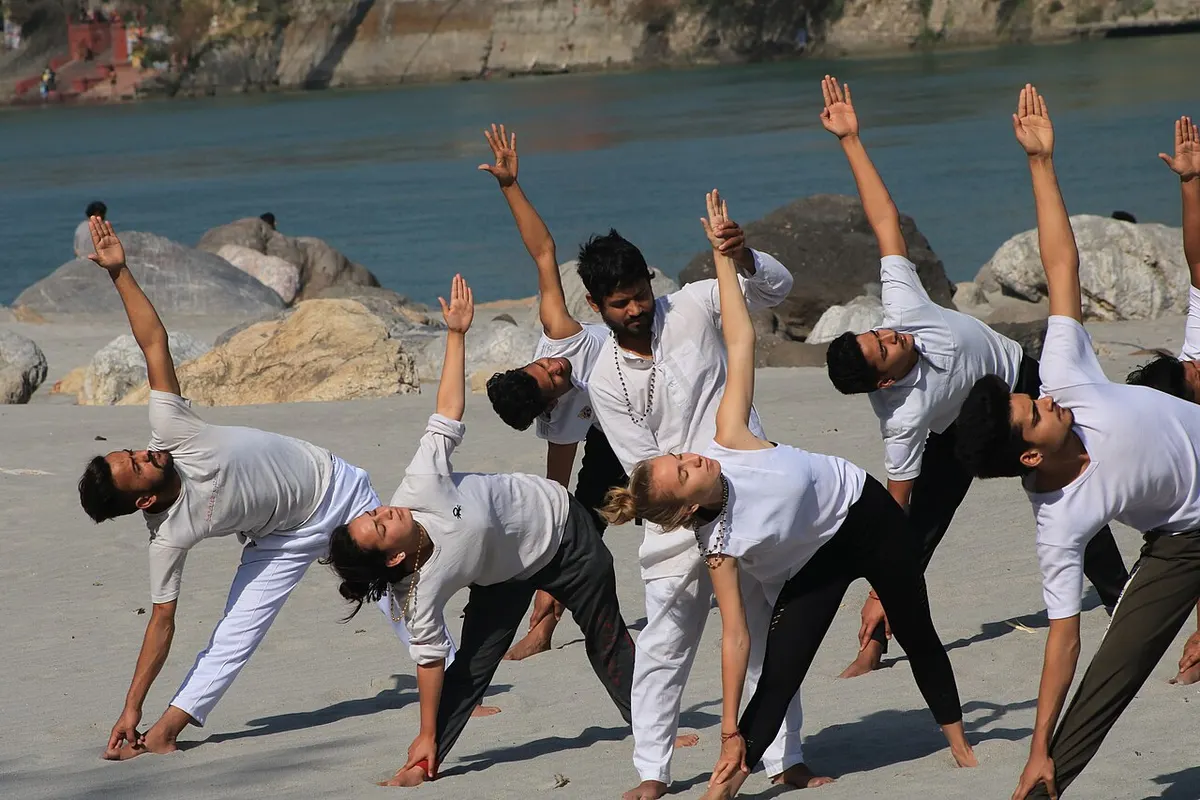
Photo: YogaTTC75 / Wikimedia Commons (CC BY-SA 4.0)
📋 In This Article
The breath is the only autonomic bodily function we can consciously control — making pranayama (breath regulation) the most direct tool we have for influencing the nervous system. Slow, controlled breathing activates the vagus nerve, shifts the autonomic nervous system from sympathetic (fight-or-flight) to parasympathetic (rest-and-digest), and reduces anxiety within minutes.
Nadi Shodhana — Alternate Nostril Breathing
Nadi Shodhana (also called Anulom Vilom) is the foundational pranayama for calming the nervous system. Technique: Close right nostril with right thumb, inhale through left for 4 counts. Close both nostrils briefly. Release thumb, close left nostril with ring finger, exhale through right for 8 counts. Inhale through right for 4 counts. Switch: exhale through left for 8 counts. This completes one round — practice 10 rounds. The bilateral nasal alternation synchronises left and right brain hemispheres and produces measurable reductions in anxiety and cortisol within 15 minutes.
- Inhale: 4 counts through left nostril
- Hold: 0 counts (skip kumbhaka for anxiety)
- Exhale: 8 counts through right nostril
- Inhale: 4 counts through right nostril
- Exhale: 8 counts through left nostril
Bhramari — Humming Bee Breath
Bhramari (Bhramar = bee) involves making a deep humming sound on the exhale with fingers over closed eyes. Technique: Sit comfortably. Place index fingers on the cartilage between ear and cheek (not inside the ear canal). Close eyes with middle fingers. Inhale fully. Exhale making a deep, steady mmm humming sound until the breath is completely empty. Repeat 7-10 rounds. The humming creates nitric oxide in the nasal sinuses (a powerful vasodilator), activates the vagus nerve directly through vibration, and immediately reduces anxiety.
Kapalbhati and 4-7-8 Breathing
Kapalbhati — forceful exhalations through the nose (passive inhalations) — energises and clears mental fog more than it reduces anxiety, but its rhythmic abdominal activation massages the solar plexus and vagus nerve, producing calm after the initial energising effect. 4-7-8 breathing (inhale 4 counts, hold 7, exhale 8) developed by Dr. Andrew Weil directly activates the parasympathetic nervous system and is among the most studied acute anxiety interventions in modern psychology.
The Science of Breathing for Anxiety
Slow breathing (below 10 breaths per minute, ideally 5-6) increases heart rate variability (HRV) — the most reliable biomarker of parasympathetic nervous system health. Low HRV is directly correlated with anxiety disorders, cardiovascular disease, and poor resilience. Practicing pranayama daily for 8 weeks has been shown to significantly increase baseline HRV, reduce cortisol, and reduce generalised anxiety scores — comparable to many pharmaceutical interventions, without side effects.
Conclusion
Pranayama is available anywhere, free, and effective within minutes. It does not require a yoga studio, mat, or special equipment. Start with 10 minutes of Nadi Shodhana daily — set a phone alarm, practice before your morning tea. In 4 weeks, measure your results: most people report significantly better sleep, reduced anxiety, and improved focus.