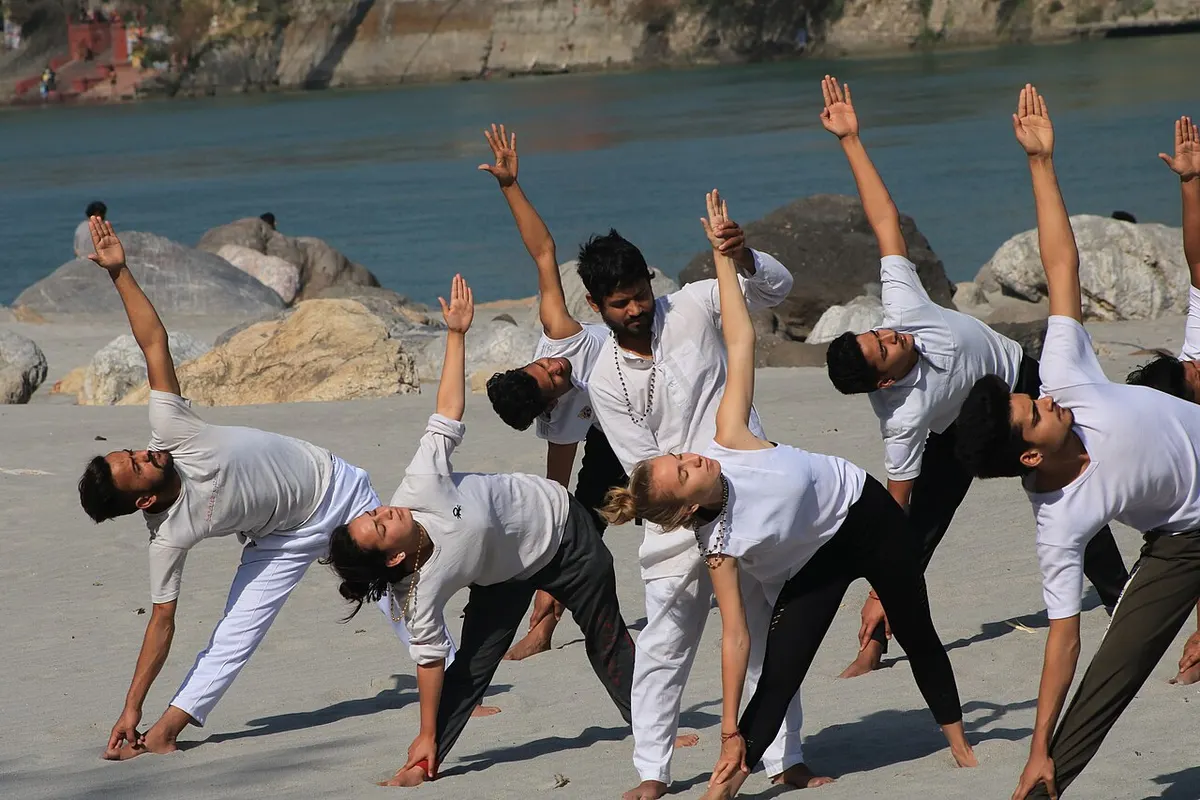
Photo: YogaTTC75 / Wikimedia Commons (CC BY-SA 4.0)
📋 In This Article
The yoga-vs-gym debate misses the point — both have distinct strengths, and understanding what each does well allows you to make intelligent decisions about your exercise practice. The short answer: yoga excels at flexibility, nervous system regulation, body awareness, and functional strength; the gym excels at maximal strength, hypertrophy, and high-intensity cardiovascular conditioning.
What Yoga Does Better
Yoga outperforms gym training for flexibility (obviously), but also for balance, proprioception (body position awareness), postural correction, breathing capacity, stress reduction, and sleep quality. Research shows yoga practitioners have significantly higher parasympathetic nervous system tone (HRV) than gym exercisers — meaning better stress resilience and recovery capacity. Yoga's focus on mindful movement prevents the movement dysfunction (compensations, imbalances) that gym training often creates. For back pain, yoga is among the most evidence-supported interventions — outperforming gym exercise in most head-to-head trials.
- Flexibility — yoga wins clearly
- Postural correction — yoga wins
- Stress reduction (HRV) — yoga wins
- Balance and proprioception — yoga wins
- Sleep quality improvement — yoga wins
- Nervous system regulation — yoga wins
What the Gym Does Better
Progressive overload — the foundation of muscle building — requires resistance that can be precisely increased over time. A gym provides this through barbells, dumbbells, and machines. Yoga bodyweight practice has upper limits: once you can do 30 pushups, the same pushups don't build more strength. Maximal strength (moving heavy things), muscle hypertrophy, and high-intensity interval training (HIIT) for cardiovascular conditioning are fundamentally gym activities. For osteoporosis prevention, heavy resistance training is significantly more effective than yoga.
The Evidence on Yoga for Strength
A systematic review of 14 randomised trials found yoga significantly improves muscular strength and endurance in sedentary individuals — comparable to moderate gym training. For strength athletes or those wanting muscular hypertrophy, yoga alone is insufficient but dramatically improves recovery, flexibility, and injury prevention. The optimal combination: 3 days strength training, 2-3 days yoga. This combination outperforms either alone for overall health metrics.
Mental and Cognitive Benefits
This is where yoga demonstrates the most dramatic advantages over gym exercise. Studies show yoga significantly reduces anxiety, depression, and PTSD symptoms — in ways that gym exercise alone does not. Yoga increases BDNF (brain-derived neurotrophic factor) similarly to aerobic exercise. It improves executive function, attention, and working memory. The meditative component of yoga activates the prefrontal cortex and reduces amygdala reactivity — producing lasting improvements in emotional regulation that no amount of bench pressing provides.
Conclusion
The best exercise routine includes both yoga and resistance training — complementary practices that each do things the other cannot. If you must choose one: yoga if stress, back pain, flexibility, sleep, and mental health are primary concerns; gym if muscle building, strength, or bone density are primary concerns. If you're currently sedentary, yoga is the more accessible starting point.