Photo: YogaTTC75 / Wikimedia Commons (CC BY-SA 4.0)
📋 In This Article
Starting yoga can feel overwhelming — thousands of poses, different traditions, competing advice. This structured 30-day plan cuts through the noise with a progressive, evidence-based home practice that builds strength, flexibility, and body awareness week by week, requiring only a mat and 20-30 minutes per day.
Week 1: Foundation (Days 1-7)
Week one focuses on the foundational poses that form the basis of all yoga practice. Practice each pose 3-5 breaths, moving slowly and focusing on alignment over depth. The sequence: Mountain Pose (Tadasana) — standing tall, grounding through feet. Cat-Cow (Marjaryasana-Bitilasana) — spinal mobility warm-up. Child's Pose (Balasana) — resting, stretching hips and lower back. Downward Dog (Adho Mukha Svanasana) — full body stretch. Warrior I (Virabhadrasana I) — hip opening, strengthening. Easy Seat (Sukhasana) — 5 minutes meditation at close.
- Tadasana — Mountain Pose, 5 breaths
- Marjaryasana — Cat-Cow, 10 rounds
- Balasana — Child's Pose, 10 breaths
- Adho Mukha Svanasana — Downward Dog, 5 breaths
- Virabhadrasana I — Warrior I, 5 breaths each side
Week 2: Building (Days 8-14)
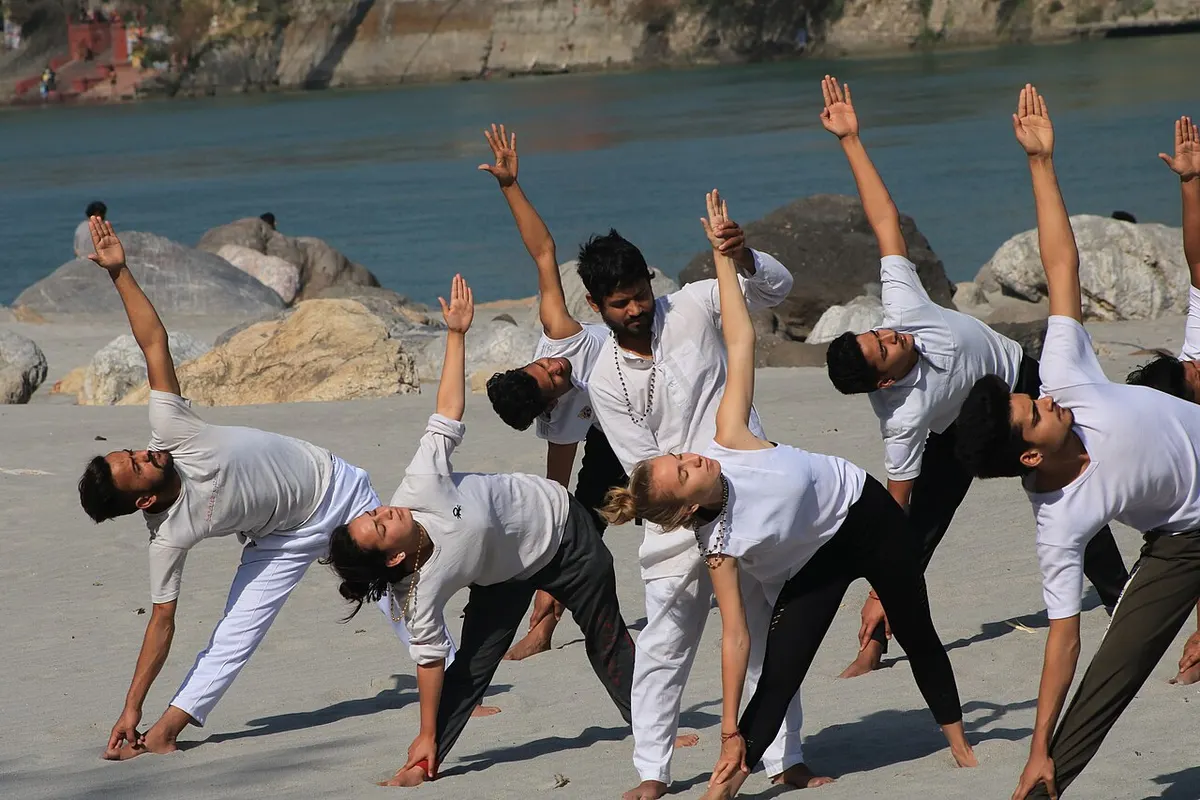
Add standing balance work and core engagement. Extended sequences begin to flow — moving with breath between poses rather than holding each statically. New additions: Warrior II and Reverse Warrior for lateral hip strength, Triangle Pose for hamstrings, Bridge Pose for spinal extension and glutes, Seated Forward Fold for hamstrings. Begin sun salutation (Surya Namaskar) practice with 3 rounds daily — this single sequence provides comprehensive full-body warm-up and is the foundation of vinyasa practice.
Weeks 3-4: Integration
Weeks 3-4 integrate pranayama (breathing practices) with asana. Begin each practice with 5 rounds of Nadi Shodhana (alternate nostril breathing) to calm the nervous system. Longer holds (10 breaths per pose) develop strength and heat tolerance. New poses: Pigeon Pose for deep hip opening, Seated Twist for spinal rotation and digestion, Legs-Up-the-Wall (Viparita Karani) for recovery. End each session with at least 5 minutes of Savasana — this is when the nervous system integrates the practice. Skipping Savasana is like skipping sleep after learning: the consolidation doesn't happen.
Avoiding Common Beginner Mistakes
Never force range of motion — yoga props (blocks, straps, blankets) exist to make poses accessible without forcing joints. Pain is a stop signal — discomfort and stretching are normal, sharp or joint pain means to back off. Breath is the guide — if you can't breathe easily in a pose, you've gone too far. Skip social media yoga comparisons — flexibility is partly genetic and has nothing to do with yoga's genuine benefits of strength, body awareness, and nervous system regulation.
Conclusion
After 30 days of consistent practice, most beginners report improved sleep quality, reduced back pain, better posture, and a calmer relationship with stress — before any significant flexibility gains. The flexibility comes later; the nervous system benefits come first. Continue to week 31.