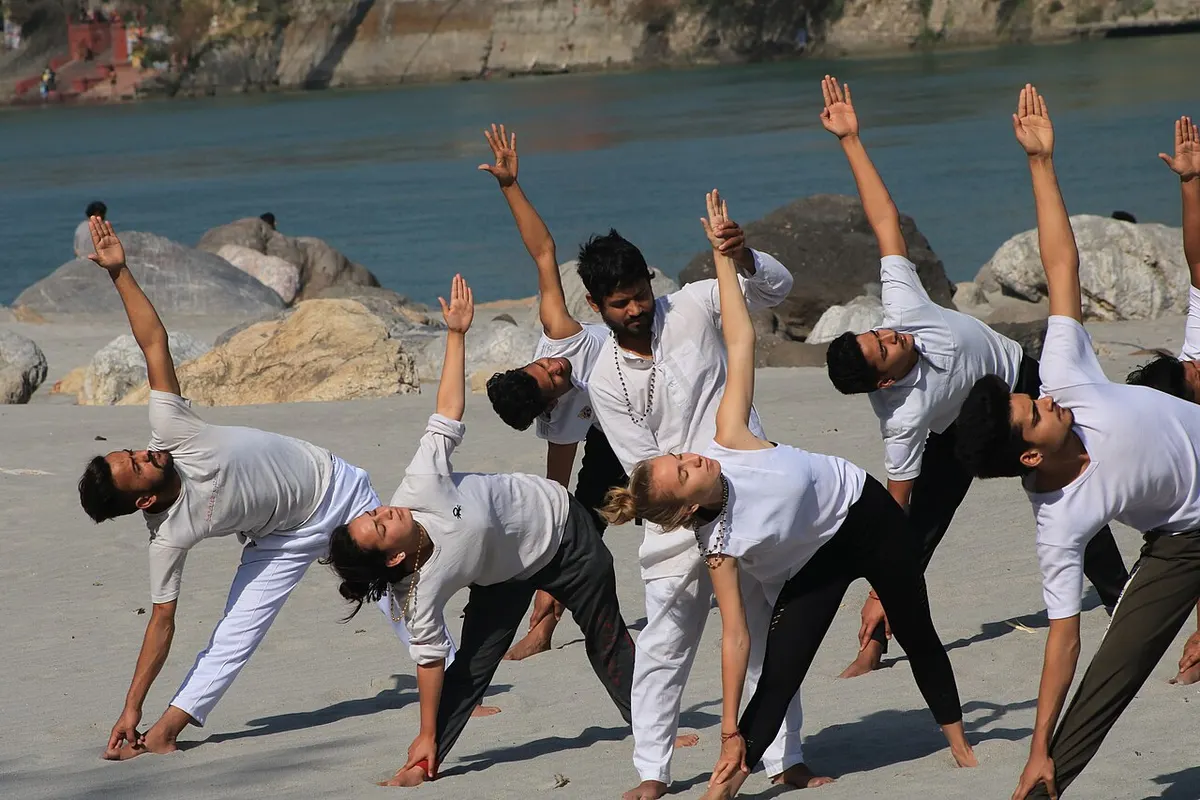
Photo: YogaTTC75 / Wikimedia Commons (CC BY-SA 4.0)
📋 In This Article
Yoga Nidra — yogic sleep — is a guided meditation practice performed lying in Savasana that induces a state of consciousness between waking and sleep (the hypnagogic state). In this state, the conscious mind rests while awareness remains active, allowing profound mental and physical restoration. Research shows 30 minutes of yoga nidra is equivalent to 2-4 hours of regular sleep in terms of physiological restoration.
The Science of Yoga Nidra
During yoga nidra, EEG studies show characteristic patterns: initial alpha waves (relaxed wakefulness), then theta waves (dream-like state, creative, emotionally open), while remaining responsive to instructions. This is distinct from sleep (delta waves with reduced consciousness) and regular meditation (sustained alpha). The theta state is associated with: integration of emotional experiences, formation of long-term memories, creative insight, and deep physiological rest with reduced cortisol. NASA research has explored yoga nidra-adjacent techniques (now called Non-Sleep Deep Rest or NSDR) for astronaut recovery.
The Practice Structure
A standard yoga nidra session has eight stages: (1) Settling into Savasana and setting intention; (2) Sankalpa — a short positive resolve or intention stated mentally; (3) Rotation of awareness through the body (61-point systematic relaxation); (4) Pairs of opposites — experiencing contrasting sensations (heavy/light, hot/cold); (5) Visualisation — rapid-fire images to engage the right hemisphere; (6) Sankalpa repeated; (7) Gradual return to full awareness; (8) Integration. Sessions typically run 20-45 minutes.
Benefits Supported by Research
Clinical research demonstrates yoga nidra: reduces insomnia severity by 50-60% in clinical trials; reduces symptoms of PTSD comparably to cognitive behavioural therapy; reduces anxiety and depression in cancer patients; reduces cortisol and inflammatory markers; improves memory consolidation; reduces chronic pain perception. The Indian Army uses yoga nidra for stress management and sleep improvement in deployed soldiers. The US Navy is studying NSDR (yoga nidra-adjacent) as a non-pharmacological sleep intervention.
How to Begin Your Practice
Lie in Savasana on a mat or firm mattress. Use a blanket if cold. Eye pillow optional. Play a yoga nidra recording (Swami Satyananda's classical recordings from Bihar School of Yoga are excellent). Simply follow the instructions — your only job is to remain aware while the body relaxes. Do not try to stay awake or fall asleep — just rest in awareness. Practice daily for at least 14 days before evaluating results. Morning practice enhances creativity; evening practice improves sleep quality.
Conclusion
Yoga nidra is the most efficient rest practice known. In an era of chronic sleep deprivation and overstimulation, it offers deep physiological restoration in a format accessible to anyone who can lie down and follow instructions. It asks nothing of you except the willingness to rest.