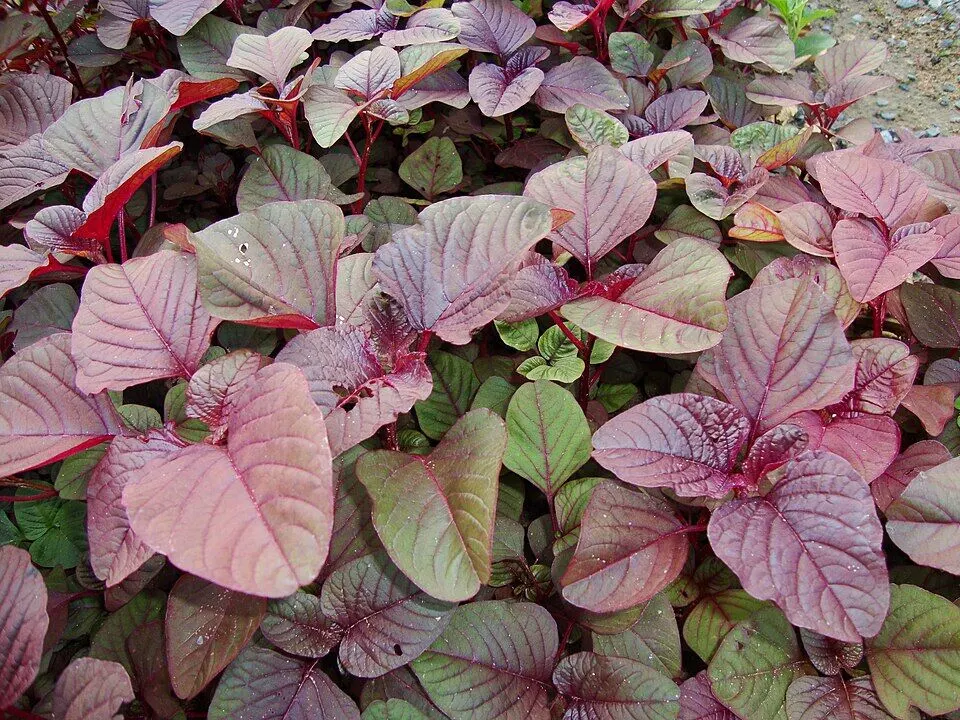
Photo: Prenn / Wikimedia Commons (CC BY-SA 3.0)
Amaranth (Chauli/Rajgira) (Amaranthus tricolor): Ancient grain-leafy superfood that is gluten-free, protein-rich, and iron-dense.
🔍 Quick Facts
| Common name | Amaranth (Chauli/Rajgira) |
| Other names | Chaulai, Lal saag (Hindi); Rajgira, Ramdana (grain); Thandu keerai, Arai keerai (Tamil); Thotakura (Telugu) |
| Scientific name | Amaranthus tricolor |
| Plant family | Amaranthaceae |
| Size | 30–100 cm annual |
| Native region | Central America, South America |
| Climate | Tropical/Temperate |
| Ease of growing | Fast |
| Parts used | Leaves, Seeds |
About Amaranth
Amaranth is grown in India both as a leafy green (chaulai or lal saag) and as a grain (rajgira or ramdana), which is eaten during fasts as laddoos and rotis. The grain is gluten-free and has more protein than most cereals, including the amino acid lysine. Amaranth greens grow quickly in summer heat when other greens fail.
Botanically known as Amaranthus tricolor, it belongs to the Amaranthaceae family. It is native to Central America, South America and grows best in a tropical/temperate climate. The parts most often used are the leaves and seeds.
Uses & Nutrition
Amaranth is best known for:
- Protein source
- Iron
- Calcium
- Gluten-free grain
- Weight management
How to Eat & Cook It
- Leaves are cooked as saag, poriyal and dal.
- Rajgira grain is popped for laddoos and chikki.
- Rajgira flour is used for fasting rotis and parathas.
How to Grow Amaranth
| ☀️ Sunlight | Full sun. |
| 💧 Watering | Moderate; drought tolerant. |
| 🪴 Soil | Any well-drained soil. |
| 🌱 Propagation | Seeds broadcast thinly. |
| 📅 When to plant (India) | Sow February–August; leaves are ready in 25–30 days. |
| 🏡 In pots / at home | Very easy in a trough or pot. |
Precautions & Safety
- Leaves contain oxalates and nitrates — boil and discard the water if eating large amounts.
- Wash well; leafy greens can carry soil contaminants.
Frequently Asked Questions
Further Reading on Amaranth
Written by the WhyOnPlanet editorial team · Last updated October 2026